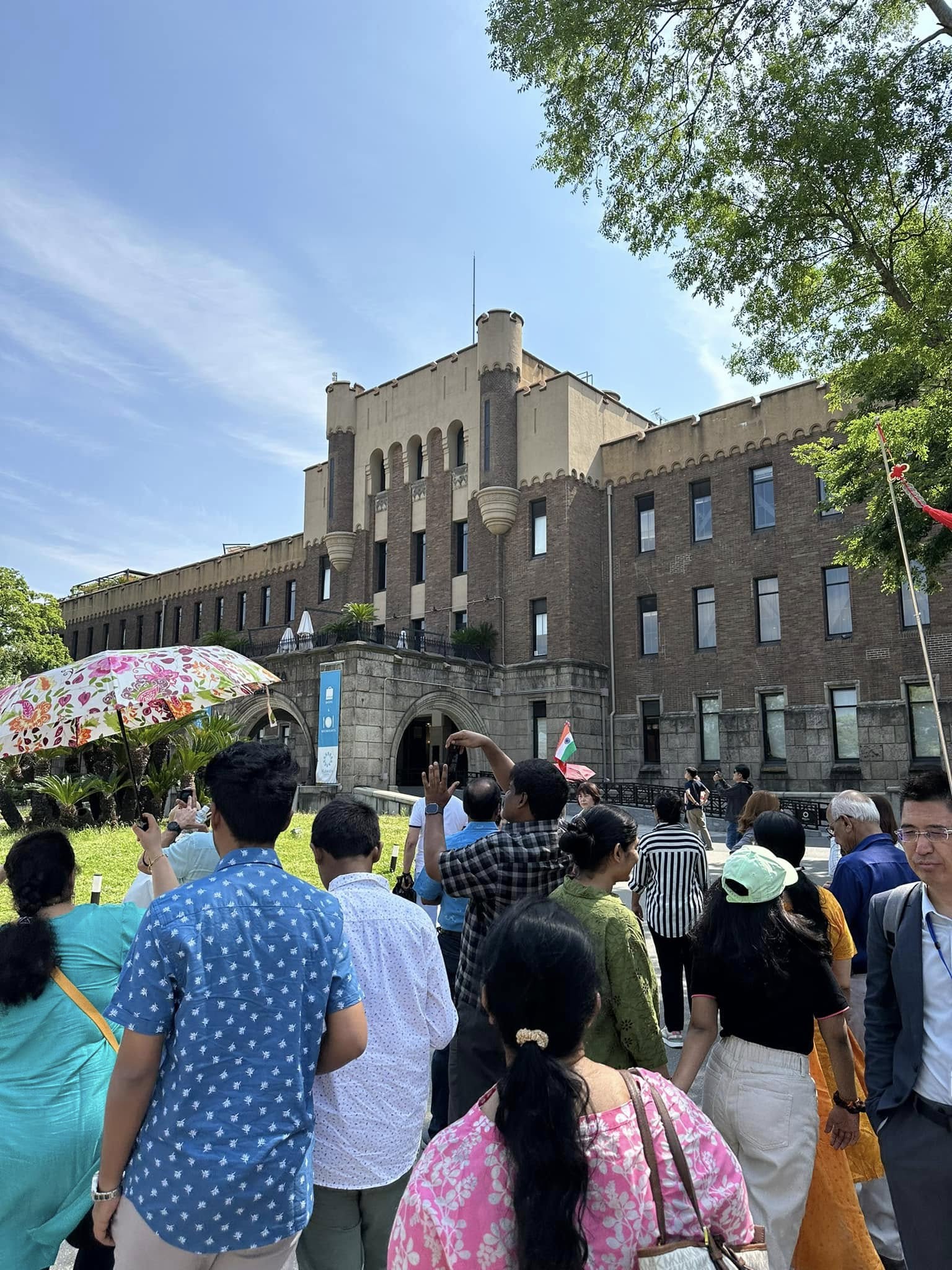
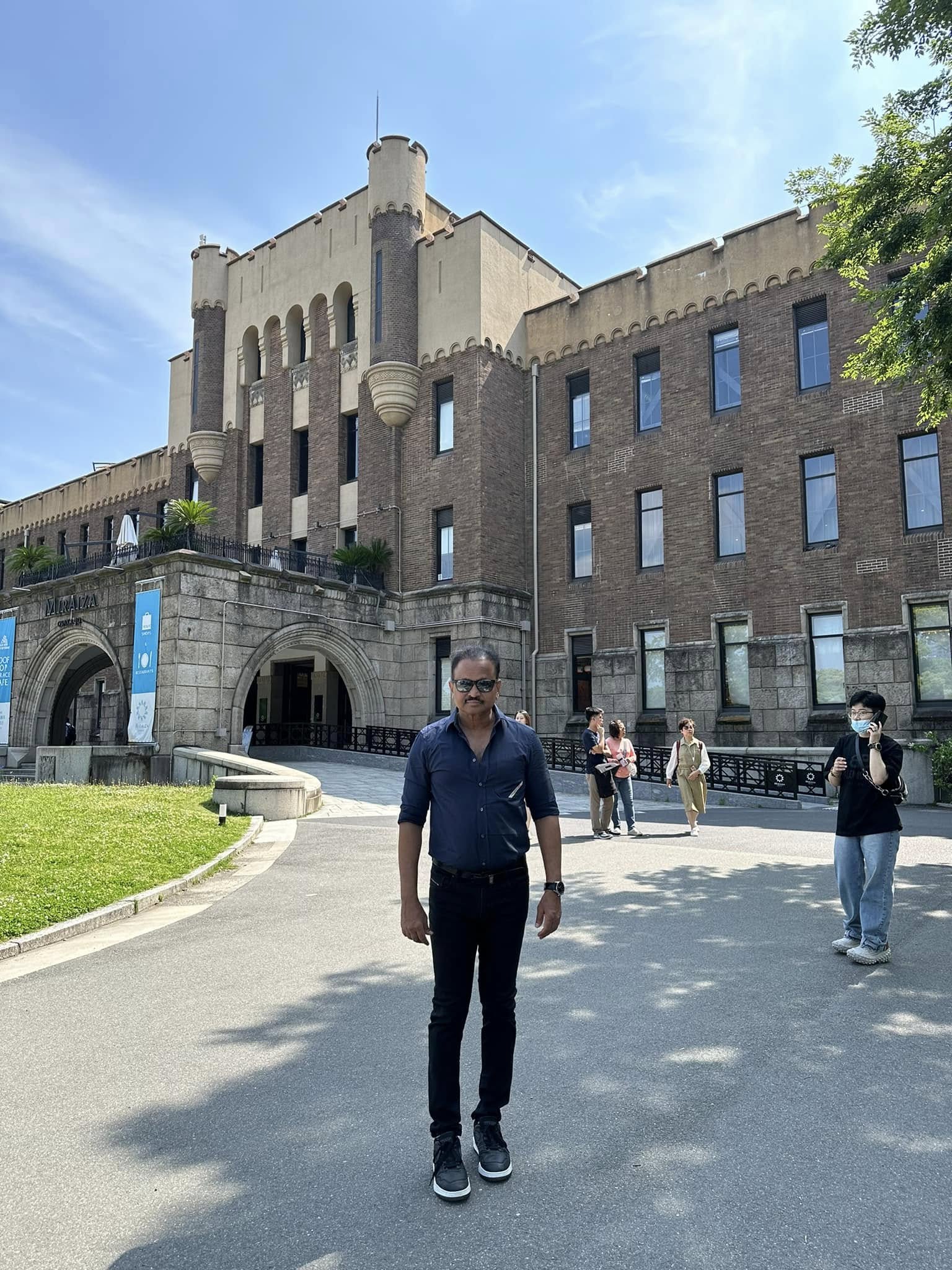
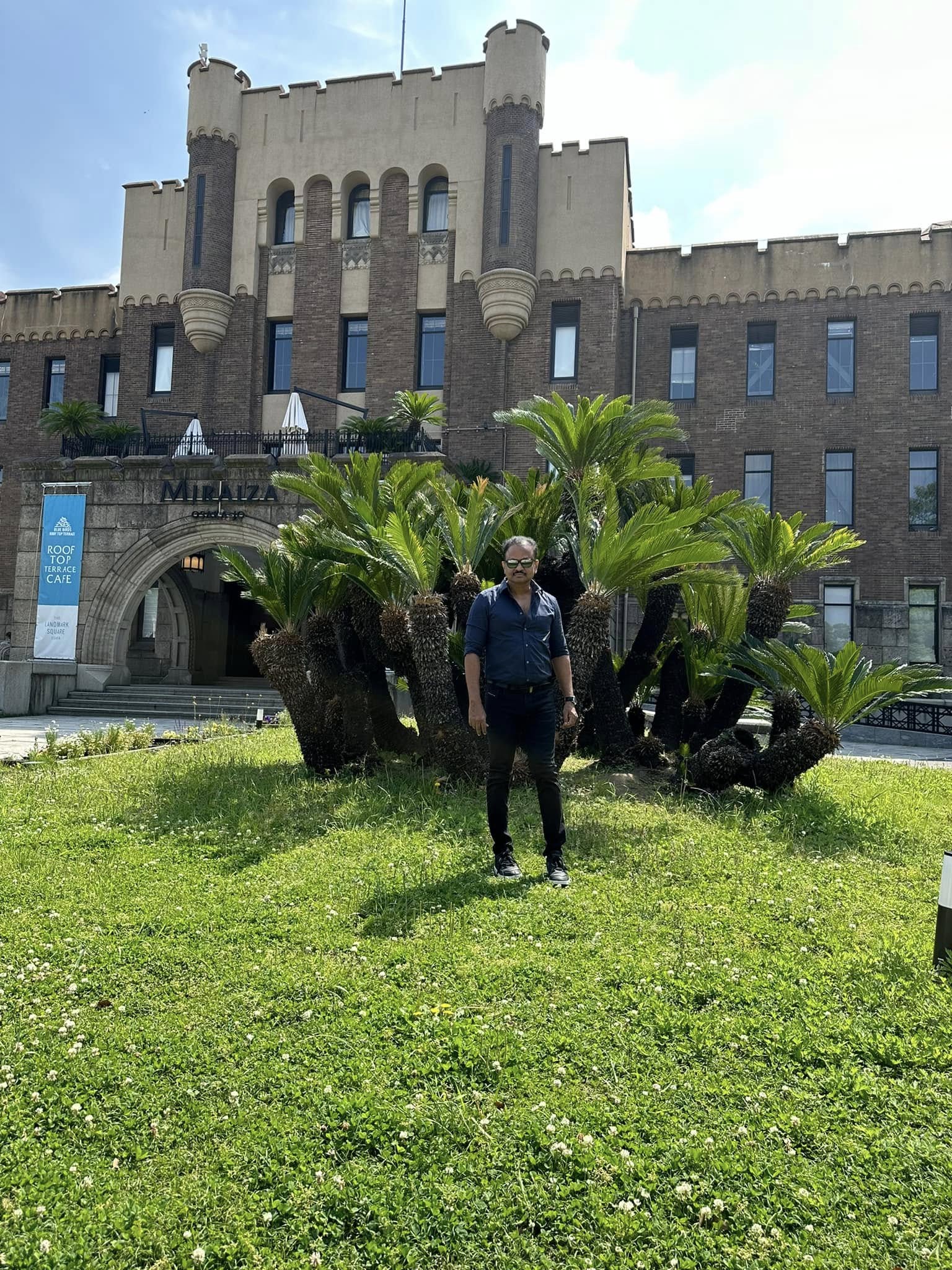
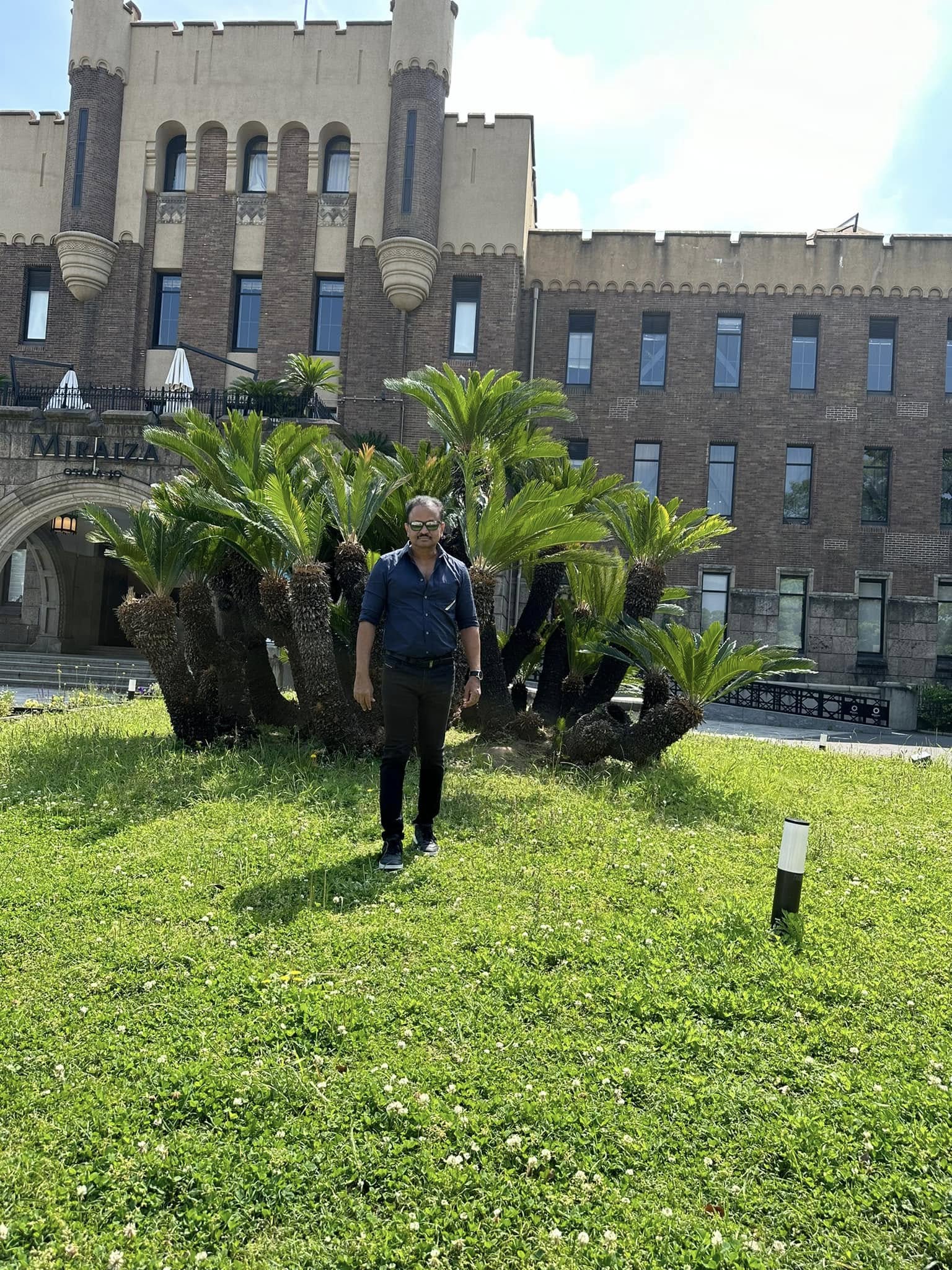
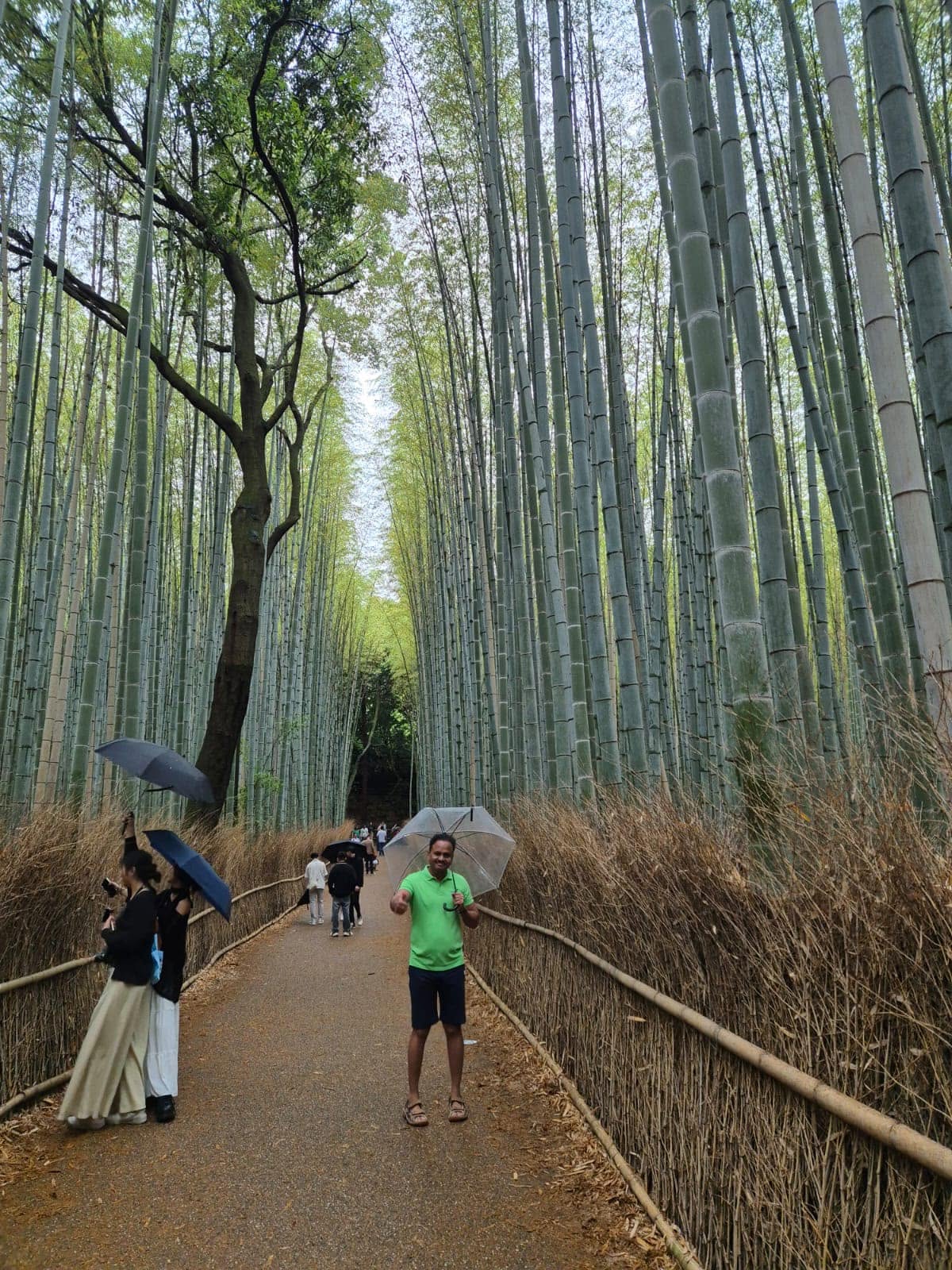
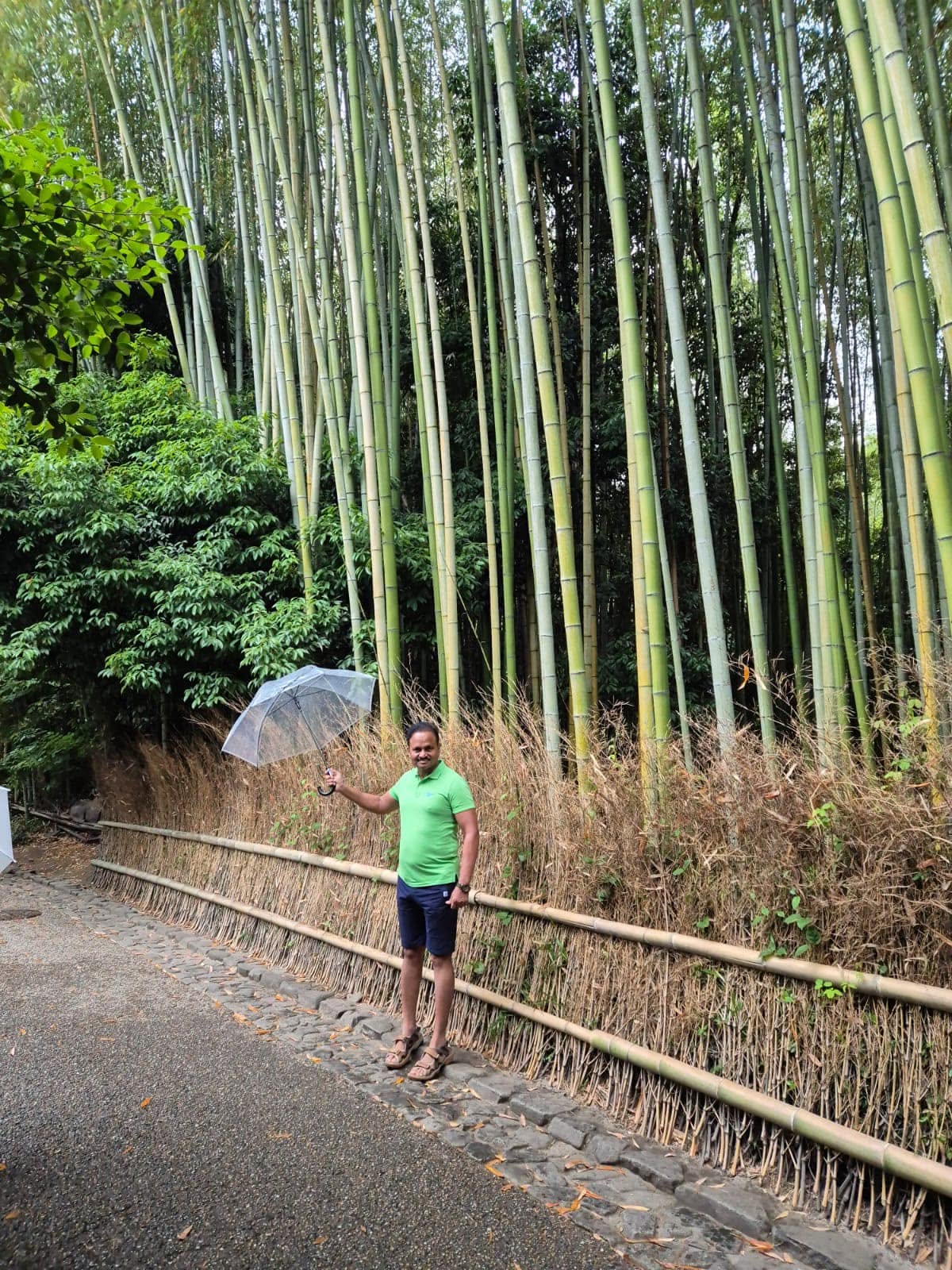
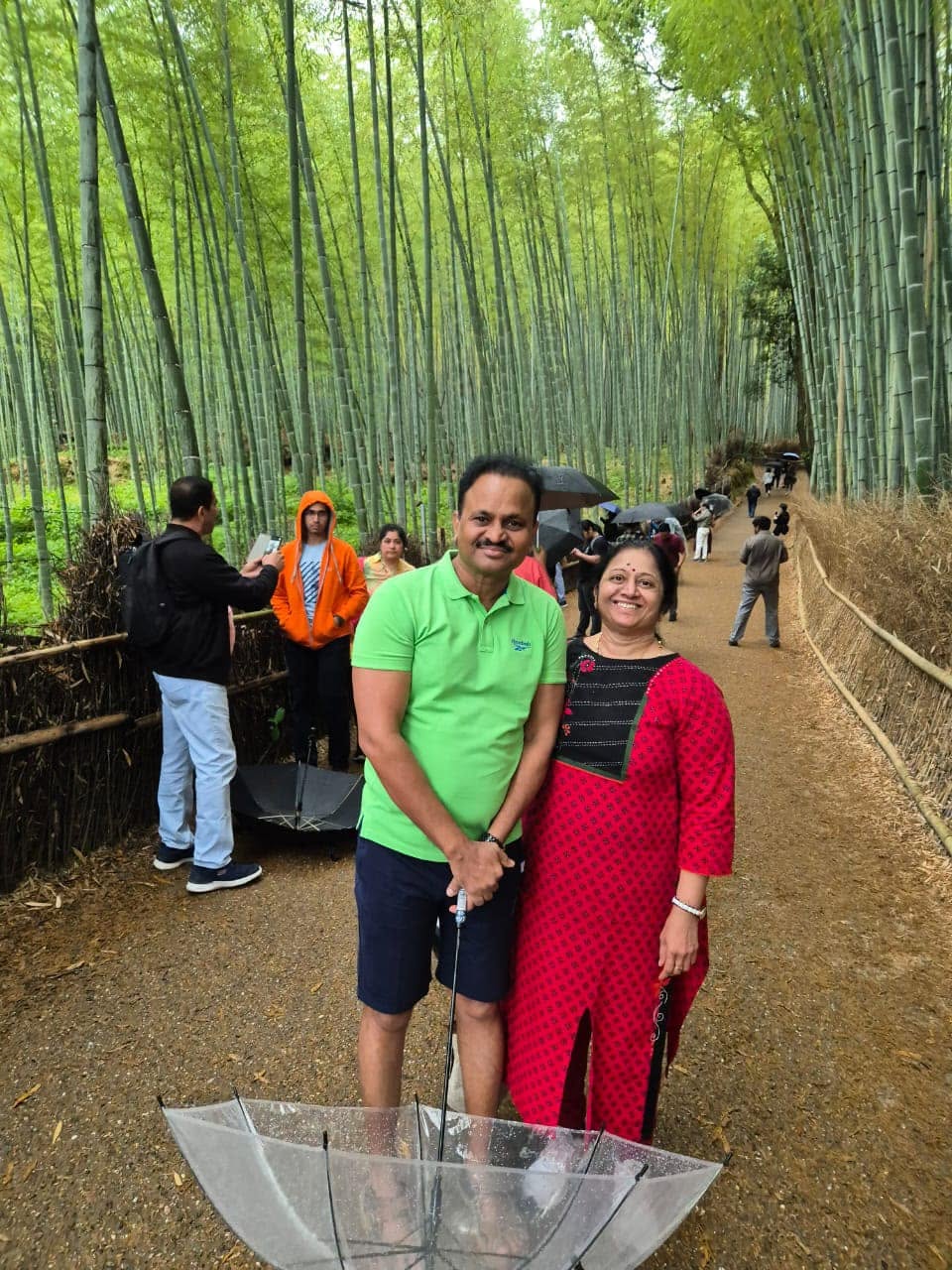
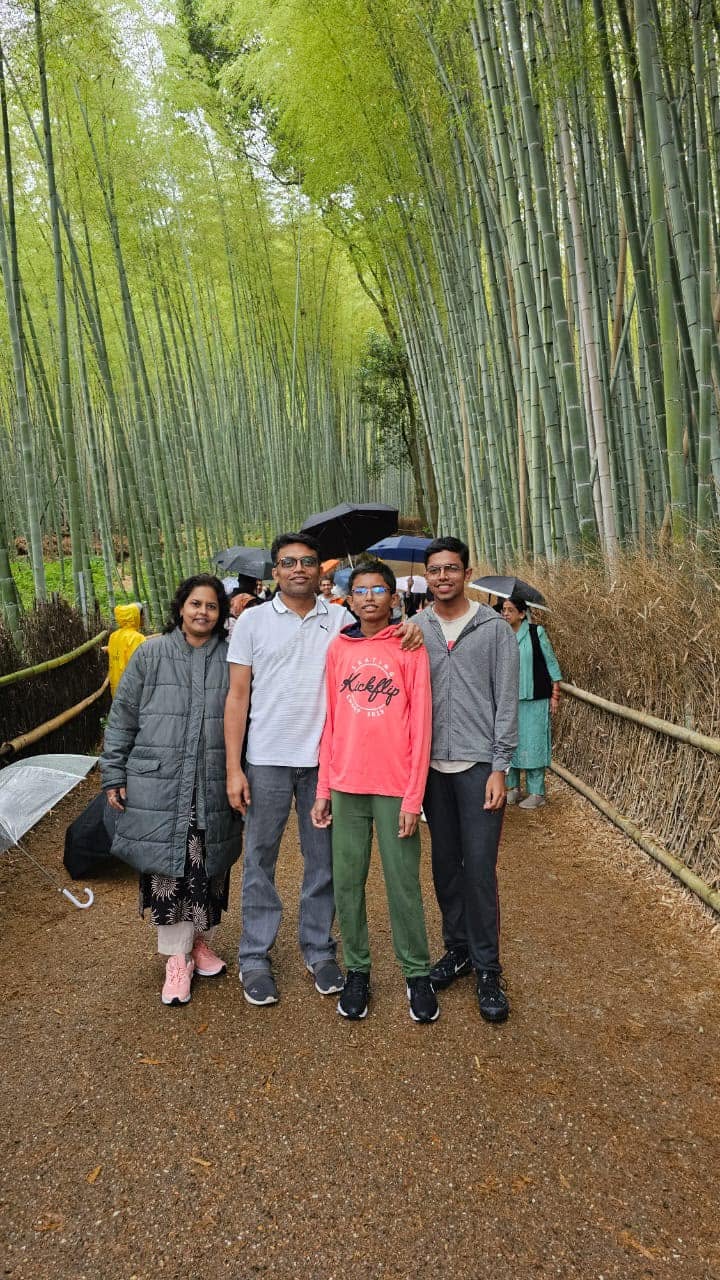
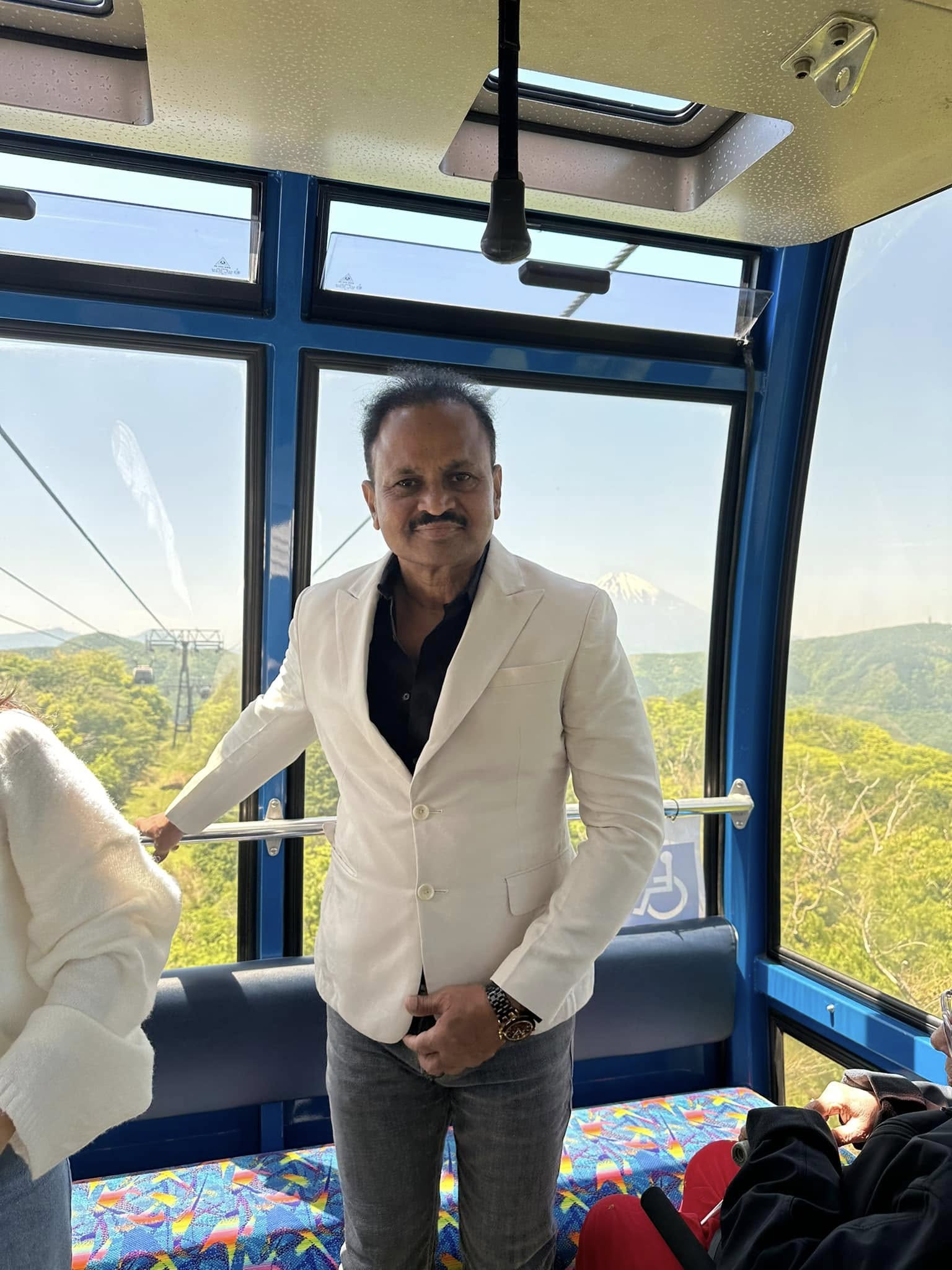
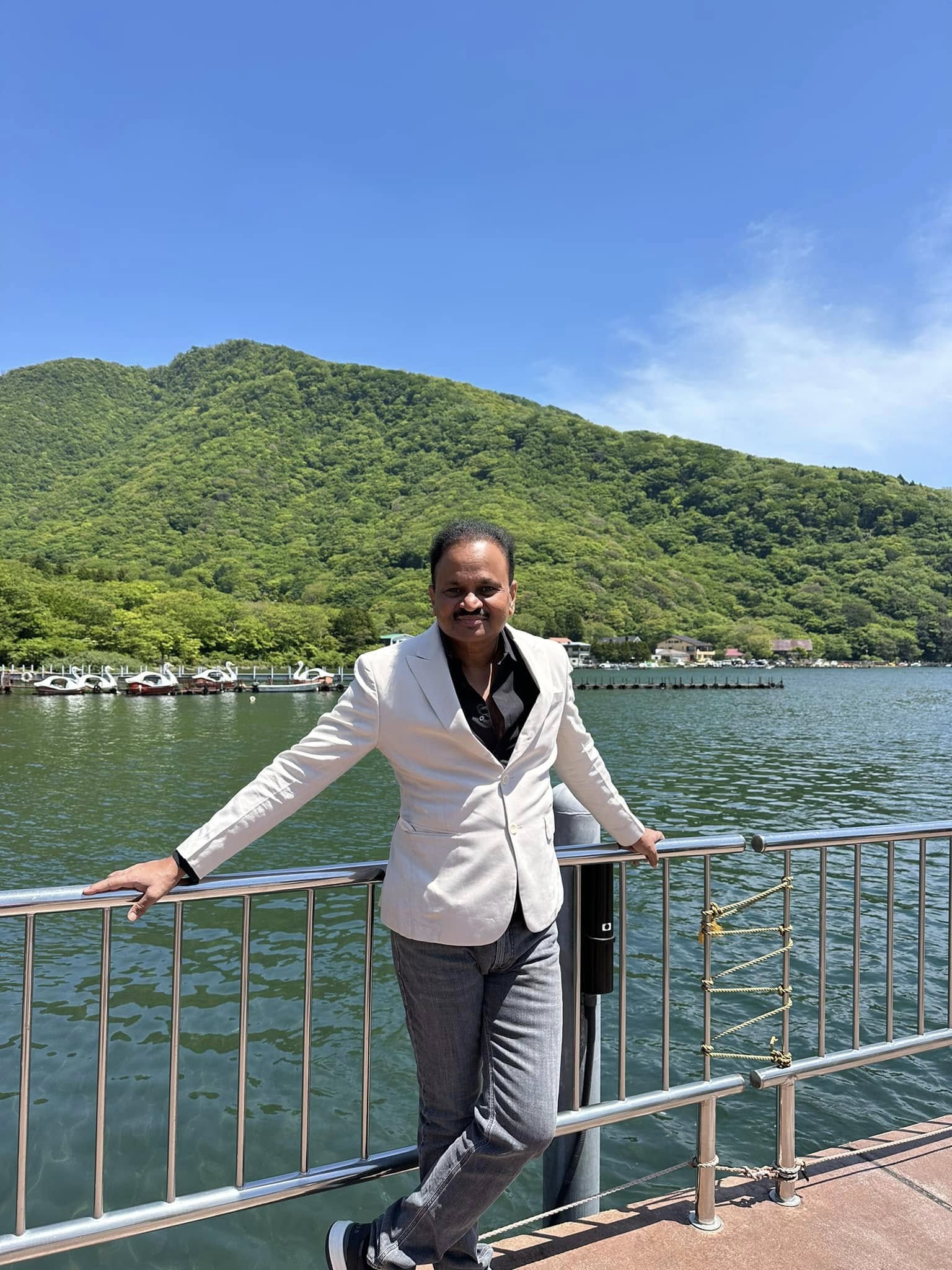
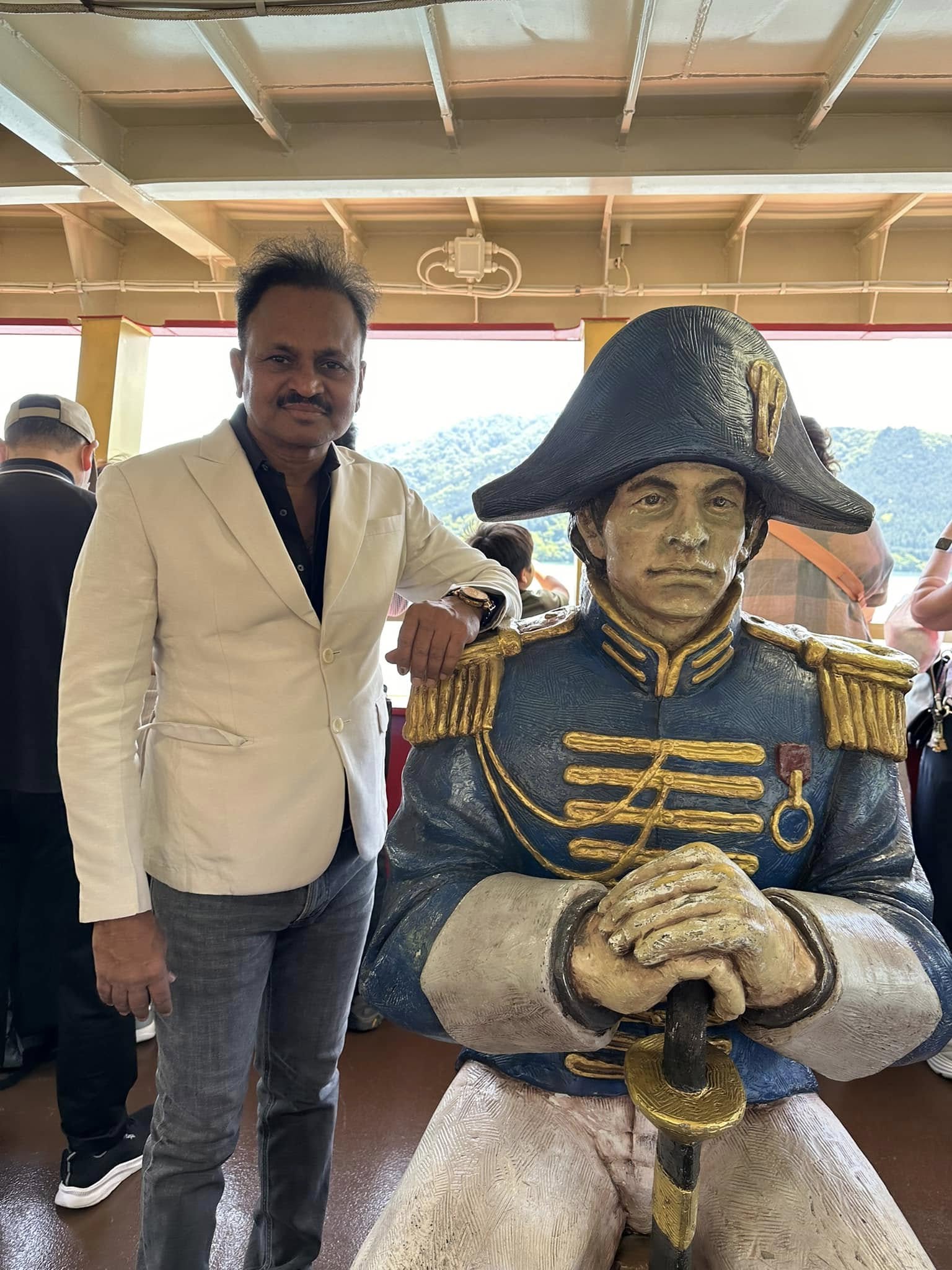
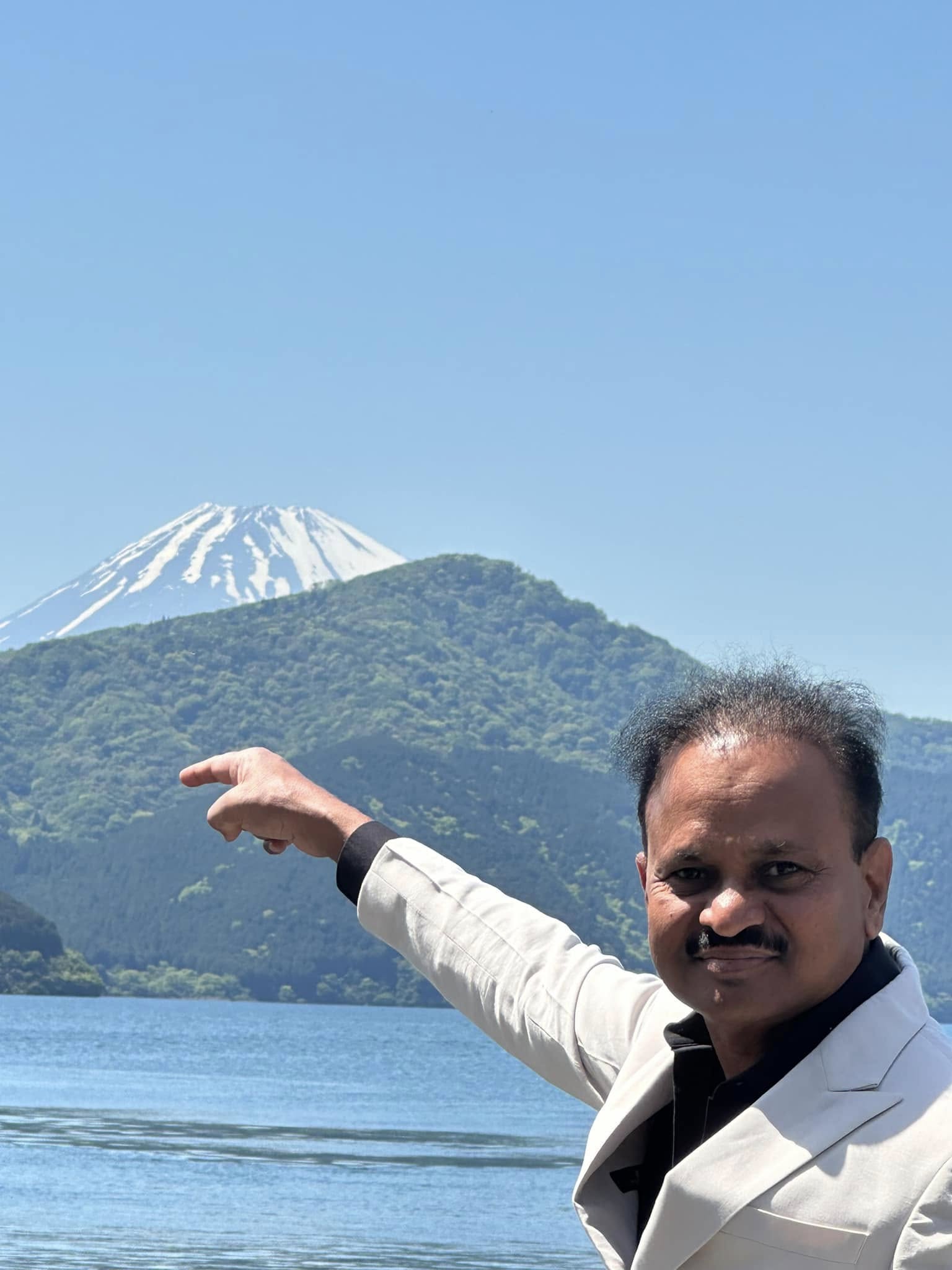
Morning 7:15 am
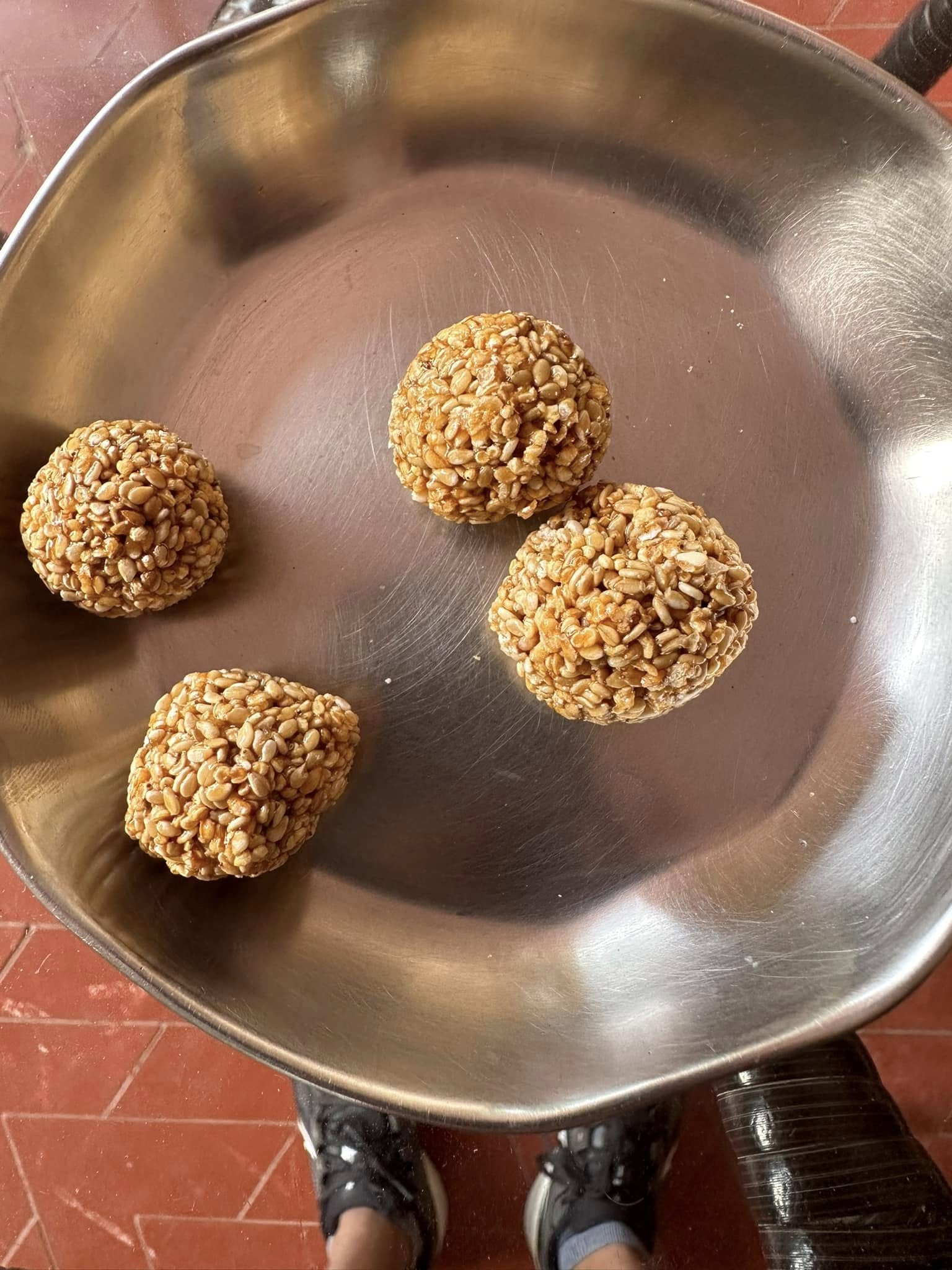

For one kilogram of body weight per person... All you need is a gram of protein! - daily
 Diabetes won't go away once it gets here.. I'm taking medication.As we get older, it is normal to increase BP .. If BP is high, you have to take pills ...The belief that once obesity sets in, it cannot be reduced...If you take protein food, you will get rid of kidney problems ..After the age of 45, the skin loses its firmness and becomes dull, and the area under the neck and around the eyes...If you think it's impossible to exercise regularly, go to the gym.డెపోటొస్తుందని .. After one age (45 plus), brain's sharpness will decrease and brain will become dizzy...
 For those who believe...
 For those campaigning...
Did you know ?
Most people don't know the difference between 1 favor and 2 observation.
https://bathakani.in/yela-kudado-cheppedi-naati...

If the Japan of the past taught us what *not* to do, the Japan of today teaches us how to grow! - BATHAKANI
Kudos to the authors of history books.
They recount events merely in terms of dates and years.
In doing so, the narrative loses its vitality, making the subject uninteresting to read.
However, when written in a storytelling format, the history of a nation or a great figure becomes a lesson in life skills.
These stories are far more thrilling than the serials aired on television.
Most people don't know the difference between 1 favor and 2 observation.
Punctuality, discipline, self-confidence, a positive attitude, determination, and resilience—the ability to rise after every fall and learn from failure—are qualities that have long been associated with the Japanese people.
"Who are these people?"
The popular movie dialogue, "Who is this fellow?", perfectly suits Japan.
Nearly 73% of Japan's land is mountainous, and only about 12% is suitable for agriculture. It is a country frequently struck by earthquakes, volcanic eruptions, and tsunamis. By geography alone, Japan should have remained less developed than many African nations.
So how did this happen?
There was once a widespread belief that Europeans were invincible. Japan became the first Asian nation to defeat a European power.
By the time of the Second World War, Japan had already emerged as a global power.
Even after being devastated by atomic bomb attacks, Japan bounced back like a ball striking the ground, rising to become an Asian technological giant—competing with the United States through bullet trains, automobiles, and countless technological innovations.
The Story of Japan
Japan's story is an extraordinary lesson in life skills.
Every student should read it.
It teaches not only what should be done, but also what should never be done.
Samurai... Sumo... Feudalism... Jomon... Yayoi... Kofun... Asuka... Nara... Heian... Kamakura... Muromachi... Sengoku... Tokugawa...
These thirteen terms summarize the broad sweep of Japanese history.
In one sentence:
Like the history of most nations, Japan's early history was quite ordinary.
There was little extraordinary about it.
Japan's real transformation began with the Meiji Restoration of 1868.
With determination and a clear vision, the country modernized itself.
Feudalism was abolished.
Land reforms were introduced.
Industries were established.
Infrastructure was built.
Modern education was implemented.
And much more.
The new government was determined that Japan should never fall behind the Western powers.
At that time, many believed that Europeans possessed some special superiority.
Instead of merely admiring Europe, Japan acted.
The government sent large numbers of students abroad—particularly to countries such as Germany—to study at its own expense.
The result?
By 1905, Japan shocked the world by defeating Russia in the Russo-Japanese War.
The world stood amazed.
When Excess Becomes Dangerous
There is an old saying:
"Excess in anything is harmful."
The very force that lifted Japan eventually became the cause of its downfall.
History repeatedly demonstrates this truth.
A century ago, the world faced the Spanish Flu pandemic, followed closely by the First World War.
These crises triggered severe economic depression, inflation, unemployment, and widespread hardship—first in America and then across much of the world.
During difficult times, societies often become vulnerable to extreme ideologies.
People in Germany, Italy, and Japan began believing that only a powerful authoritarian government could save their nations.
Thus emerged:
- Adolf Hitler in Germany,
- Benito Mussolini in Italy,
- Joseph Stalin in the Soviet Union,
- and a military government in Japan.
At the same time, colonial powers such as Britain and France continued to rule vast overseas empires.
This, in brief, was the political landscape between the two World Wars.
From Builders to Destroyers
Few would believe it today.
People often think:
"The smiling, hardworking Japanese? Could they really have committed such acts?"
Sadly, yes.
History records terrible atrocities.
In 1937, Japan occupied Nanjing (Nanking) in China.
Approximately 300,000 civilians were massacred by the Japanese Army.
Japan also invaded Korea, China, and Southeast Asia.
Millions of civilians were forced into slave labor.
They were compelled to construct railways and military infrastructure.
Many were starved to death.
Thousands of women were forced into sexual slavery.
Under the infamous Unit 731, Japan carried out horrific human experiments.
Prisoners of war were subjected to surgery without anesthesia.
Deadly bacteria were deliberately tested on living humans.
Victims were mutilated, tortured, starved, and killed.
The Bataan Death March, the Burma Railway, the Manila Massacre, and many other wartime atrocities could fill entire volumes of history.
The cruelty displayed during this period is difficult to describe.
The Price of Militarism
The tragedy is that ordinary civilians—including innocent children in Hiroshima and Nagasaki—ultimately paid the price for the actions of their military rulers.
At the same time, many historians argue that without the atomic bombings, Japan's military regime might have continued the war much longer, leading to even greater destruction across Asia.
Indonesia, then under Dutch colonial rule, was occupied by Japan during the war.
Initially, many Indonesians welcomed the Japanese, believing they had been liberated from colonial rule.
Soon, however, they discovered that Japanese occupation was even harsher.
Many came to believe that Dutch rule had been preferable.
Even after Japan's defeat, Indonesians under Sukarno had to wage another struggle for true independence.
Netaji and Japan
India's beloved leader Netaji Subhas Chandra Bose believed that "the enemy of my enemy is my friend."
He first sought support from Stalin.
Then he met Hitler.
When neither effort succeeded, he undertook a remarkable submarine journey covering thousands of miles to reach Japan.
His goal was simple:
To secure Japanese support in India's struggle against British rule.
For a while, success seemed within reach.
The Andaman Islands came under Japanese control.
Japanese forces advanced as far as Burma.
But just then, Japan's fortunes began to collapse.
Had history unfolded differently, Netaji might have faced the same tragic circumstances as Sukarno.
Instead, because of Japan's defeat, Netaji spent his final years in uncertainty rather than leading a free India from Delhi.
A Lesson for Humanity
Yesterday marked the remembrance of N.T. Rama Rao.
Every Telugu-speaking person is familiar with Dana Veera Soora Karna.
Karna was a noble soul.
His greatest mistake was keeping the company of the wicked.
In my view, Netaji was a modern-day Karna.
Even after the Hiroshima bombing, Japan's military rulers refused to surrender.
Believing that another strike was necessary to force surrender, the United States dropped the Fat Man plutonium bomb on Nagasaki on 9 August 1945.
Only then did Japan surrender.
In Germany, Hitler committed suicide.
The era of fascist dictatorships came to an end.
Japan turned away from militarism.
It chose economic development over war.
It rebuilt itself.
It overcame the scars of Hiroshima and Nagasaki and became one of the world's most advanced nations.
If you want to understand how humanity should live, look at modern Japan.
If you want to understand how humanity should never behave, study the actions of Japan's military rulers between 1930 and 1945.
Sayonara... Sayonara...
Not Everything That Is White Is Milk...
A story from some time ago...
A man started a real estate company and marketed it in a unique way.
He advertised that his venture was exclusively for people belonging to a particular community (caste). Naturally, many people from that community trusted him and purchased plots.
A few months later, it was exposed as a fraudulent venture.
Those who had trusted him suffered the most. He had completely deceived people from his own community.
People asked, "How could someone betray the very people who trusted him?"
But experienced fraudsters have a different saying:
"Cheating is possible only when there is trust."
Today, social media has become one of the biggest platforms for such deception.
Someone may constantly criticize one political party while praising another. Naturally, supporters of that party—or, more specifically, people from a particular social group—begin following him.
That following becomes his investment.
He cleverly uses the trust of his followers for his own benefit.
Business itself is not wrong.
But cheating is never a business.
Please don't ask me who I'm referring to. I cannot even give hints. I have no interest in creating personal enemies on Facebook.
One truth remains:
Without trust, cheating is impossible.
Does This Logic Apply to Vasireddy Amarnath Too?
Absolutely.
Never trust anyone blindly.
As an old Telugu proverb says:
"Listen to everyone, but don't accept anything without thoughtful examination."
Ask yourself honestly:
- Has Vasireddy Amarnath ever directly or indirectly asked you for money or personal help?
- Has he ever depended on you for personal benefit?
I must thank two people:
- Janapati Srinivas of Miryalaguda, who once invited me home and served me fruits.
- Mr. Gopi, who attended my class in Karimnagar and later gifted me two large cucumbers—which became my lunch that day.
Beyond such gestures of affection, has he ever:
- Asked you to buy a product?
- Promoted a commercial brand?
- Campaigned directly or indirectly for any political party?
- Promoted any political ideology?
- Gathered followers merely to showcase his popularity and gain titles, recognition, or positions?
If the answer to even one of these questions is "Yes," then perhaps there could be some hidden motive.
In that case, don't trust blindly.
Judge People Carefully
There is a person I have known for nearly thirty years.
He is intelligent.
He entered politics and achieved success.
I understand his personality very well.
For him, money is extremely important.
I'm not saying he would necessarily cheat for money.
But he always acts in ways that protect his own interests.
He is extremely self-serving.
I watched him succeed in politics for years, yet I never spoke publicly about him.
Now, slowly, people are beginning to recognize his true nature on their own.
Please don't ask for hints in the comments.
I have no desire to target anyone personally.
My purpose on Facebook is simply to share thoughts that may help society.
Nothing more.
Truth Takes Time
Falsehood is highly active.
There is an old saying:
"A lie travels around the world before the truth even wakes up."
Yet...
Truth lives much longer.
Lies have a short life.
Truth ultimately prevails.
So how do we distinguish truth from falsehood?
We all have a brain.
The key is to use it wisely.
Yesterday evening, someone repeatedly called me through Facebook Messenger.
When I finally answered, it turned out to be a stranger.
I don't recall ever seeing him in real life or even interacting with him on Facebook.
He claimed that somewhere in central India he had been robbed and urgently needed money.
Message after message arrived saying:
"Please send money immediately. I'll return it later."
I replied through a voice message:
"Do I really look that naïve to you?"
"I have around five thousand friends and followers on Facebook. Do you think I will send money simply because a complete stranger tells me an emotional story?"
"Even if your story is true, don't you have relatives or friends in real life? Why aren't you calling them first? How did Vasireddy Amarnath suddenly become your emergency contact?"
"If you were really robbed, which police station did you report it to? Where is the FIR copy?"
"I could even use my contacts to ask the local police to verify your situation. If your story is genuine, they can help you. If it is fake, the truth will immediately come out."
"But simply because someone tells an emotional story on Messenger, I'm not going to spend my time or money without verification."
"I'm a practical person—not a naïve character from an old movie who cries and sends money to every stranger."
That is called critical thinking.
Think for Yourself
Ask yourself honestly:
Is Vasireddy Amarnath trying to exploit anyone?
Is there any hidden agenda behind his posts?
Use your own critical thinking to decide.
Whenever I criticize someone gently, it is because I believe there is a larger social issue involved.
It is never about personal politics.
Some truths reveal themselves slowly.
Institutions eventually do their work.
Those who understand—thank you.
Those who don't—please allow time to reveal the answers.
A Word About Andhra Pradesh Politics
A few days ago, I asked whether I should write about Andhra Pradesh politics.
Did you notice the responses?
Many people said,
"Please don't, sir. People will misunderstand you."
The level of emotion I witnessed was unlike anything I have seen before.
On both sides.
It was beyond ordinary political rivalry.
If I write something that appears to favor one side, supporters celebrate.
If I write something that hurts that side, anger immediately turns toward me.
Many people today are simply not prepared to hear uncomfortable truths.
Emotions have reached an alarming level.
In a post I made about ten days ago, I hinted—indirectly—at what I believed would happen in Andhra Pradesh.
Many readers understood my observations about national politics.
Some understood what I wrote about Telangana.
But almost no one seemed to understand what I was trying to say about Andhra Pradesh.
I thought to myself,
"Thank God."
A Final Thought
Vasireddy Amarnath belongs to everyone.
Whether it was midnight, the difficult days of the pandemic, or the years that followed, I have always tried to offer suggestions and guidance as though I were a member of your own family.
I would prefer that relationship to remain exactly that.
When emotions are running this high...
When neither side is willing to calmly hear facts...
What is the point of speaking truths that only invite trolling?
My only concern is this:
When election results are announced, many people may experience deep disappointment and emotional distress.
During the difficult days of the pandemic, I tried to support many people through words—even when they hadn't asked for help.
If, after the results, you find yourself emotionally overwhelmed and unable to cope, don't hesitate to reach out to me through Messenger.
You don't have to face it alone.
https://www.youtube.com/watch?v=JTUxlf-JB1g
How to understand teenagers? | How Parents Should Deal with Their Teenage Kids ? || Pratidhwani
What does 'Sunrisers' mean?


It is not right to make teachers go door-to-door and spread negative propaganda.
Here is a public challenge.
Whether it is international or corporate—come one by one or a thousand at a time. You bring the judges yourselves.
Let’s go live on Facebook.
If even a single person says your teaching standards are good, I am ready to face public punishment.
This isn't idle talk.
If you have the guts, step up to the challenge.
What if you don't have patience to read and understand?

The Mischievous Little Girl
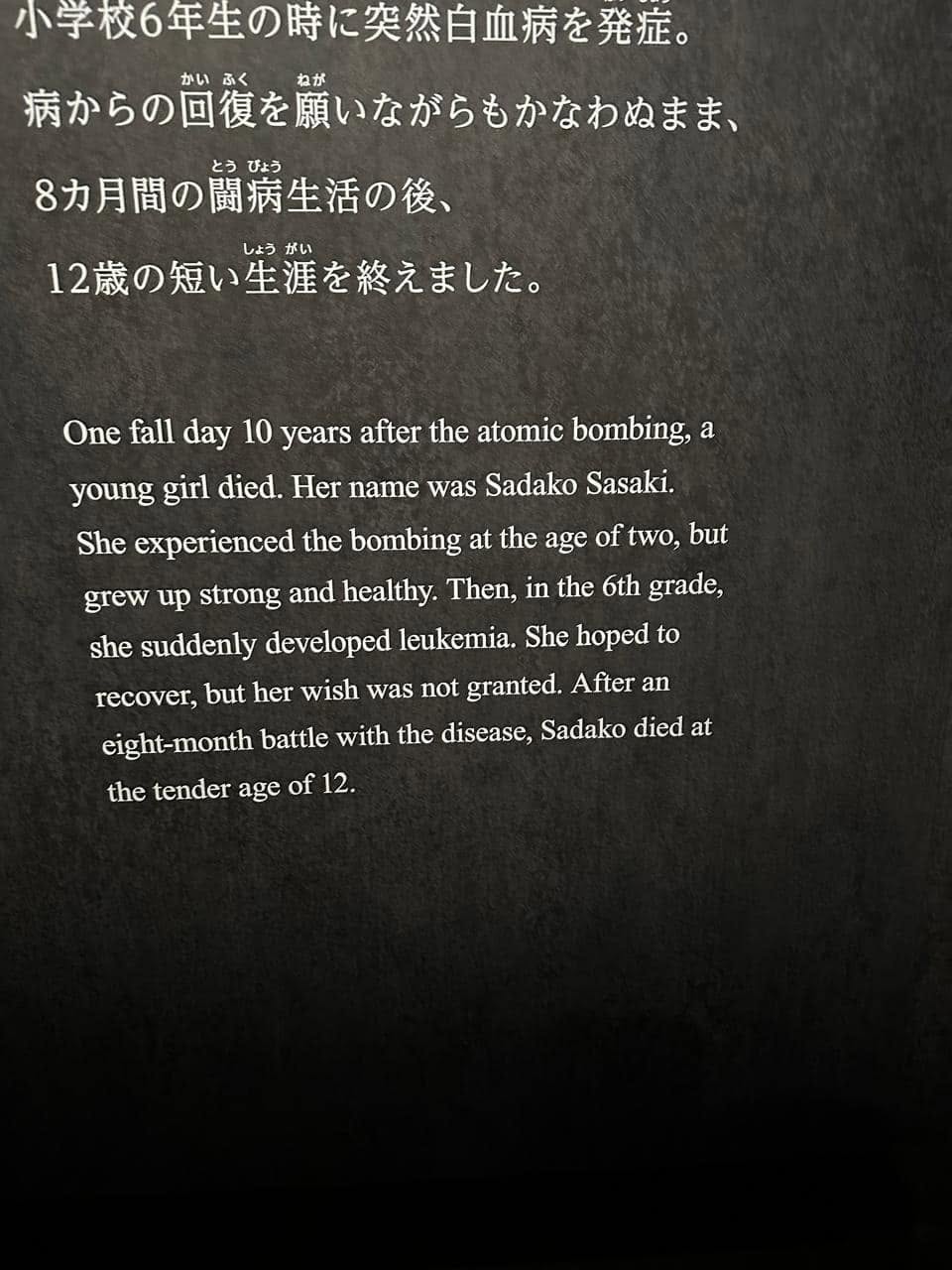
By the time she had just begun to take her tiny baby steps, her city had become a vast field of death.
On the very first day of the atomic bombing of Hiroshima, nearly 80,000 people lost their lives.
By December 1945, the death toll had risen to approximately 140,000.
She was only two years old then.
Like a tiny firecracker that somehow survived the flames, the little girl escaped the disaster without any immediate health complications.
Her parents raised her with immense love and affection.
To Shigeo Sasaki and Fujiko Sasaki, she was the precious flower in their garden, growing up like a bright little moonbeam.
She excelled in sports.
There was hardly anyone who could beat her in running races.
She was playful...
Always cheerful...
She ran like a graceful deer.
Who was she?
She was Sadako Sasaki—
The little heroine of Hiroshima.
Stories like this are usually found only in folklore.
Yet this is a true story.
The atomic bomb and its radiation claimed countless lives.
Many survivors suffered severe radiation-related illnesses.
Vomiting...
Nausea...
High fever...
Bleeding...
Hair loss...
Such symptoms became tragically common in Hiroshima.
While about 140,000 people had died by December 1945, many more later lost their lives due to radiation-induced diseases and long-term health complications.
Imagine losing almost everyone you knew.
What state of mind would you be in?
The explosion had destroyed hospitals, drinking water systems, sanitation facilities, and other basic infrastructure.
People had no money.
No food.
Families who had once lived comfortably were suddenly plunged into extreme poverty.
The environment was contaminated.
Infectious diseases spread rapidly.
Millions felt,
"Those who died were the fortunate ones. Why did we survive?"
Such was the reality of Hiroshima after World War II.
But little Sadako Sasaki seemed fortunate.
Both of her parents survived.
She grew up happily and amazed everyone around her.
Then fate struck.
It was 1954.
Sadako was eleven years old.
She dreamed of becoming a champion runner.
She trained enthusiastically to win races.
Then one day...
Without warning...
She became weak.
She collapsed.
Her parents rushed her to the hospital.
The diagnosis was devastating.
Leukemia (blood cancer).
The doctors struggled to break the heartbreaking news.
She was admitted to the hospital.
But Sadako was determined.
She possessed extraordinary courage and unwavering hope.
Even while undergoing treatment, her cheerful personality and optimism won the hearts of doctors, nurses, patients, and everyone she met.
She became a little angel to them all.
She desperately wanted to live.
She dreamed of a long and happy life.
That was Sadako's determination.
In Japan, folding paper into beautiful shapes is a traditional art known as origami.
Someone at the hospital told her an old Japanese legend:
If a person folds one thousand paper cranes, God will grant their wish.
From that day onward, Sadako folded every scrap of paper she could find into delicate paper cranes.
But the little girl lost her battle.
Cancer claimed her life before she could complete one thousand cranes.
Sometimes it feels as though angels briefly visit Earth...
As if they accidentally wandered here...
Only to return too soon.
Sadako was one such angel.
She left everyone in a sea of sorrow and departed forever.
After her passing, her parents continued folding the paper cranes she had begun.
Today, a memorial dedicated to Sadako Sasaki stands in Hiroshima.
Every year, children from around the world gather there, folding colorful paper cranes with a heartfelt message:
"Dear adults, please don't let hatred and war destroy our lives. We don't want nuclear weapons."
For the survivors, life itself became a living nightmare.
Many who believed they had escaped unharmed suddenly developed cancer five, ten, or even more years later.
They lived in constant fear...
Never knowing when illness might strike.
They lived while dying.
And died while still living.
There may be a thousand reasons to hate.
But there is only one reason to love:
Because you are human.
Many years have passed.
Yet not a single person who closed their eyes forever has ever returned.
We have only one life.
If we choose love,
Life becomes a beautiful garden.
If we choose hatred,
Life becomes another Hiroshima.
This post is dedicated to the loving memory of our family's spirited little girl, the late Vasireddy Rithika.


How to understand teenagers? | How Parents Should Deal with Their Teenage Kids ? || Pratidhwani
Watch ETV Prathidhwani tonight at 7:30.

Some cyber thief is asking for money using my name.

Some cyber thief is asking for money using my name.
An unimaginable atrocity!
Hiroshima!
A beautiful city!
Surrounded by high hills.
Industrially developed.
And a Japanese military base, too!
That... Monday... in just a few minutes... destroyed the city and its inhabitants.
August 6, 1945. Time: 8:15 AM.
An American warplane dropped an atomic bomb named "Little Boy" over Hiroshima.
It was designed to detonate at an altitude of 1,900 feet—or 600 meters—above the ground.
Why was it designed to explode in mid-air?
We are familiar with Diwali firecrackers or crude homemade bombs.
This was an atomic bomb.
That is the crucial difference!
If it explodes in the air, its impact spreads over a much wider area.
That is why it was designed that way.
It detonated 43 seconds after being dropped from the plane.
Uranium is a radioactive material; a process of nuclear fission began within it.
At a temperature of 100 degrees, water begins to turn into steam.
Iron melts at 1,538 degrees.
Hardwoods like Burma teak burn at temperatures below 1,000 degrees.
The temperature of lava erupting from volcanoes is 1,200 degrees. The temperature on the Sun's surface is 5,500 degrees.
You might find this hard to believe.
When the atomic bomb detonated in the skies above Hiroshima—at an altitude of just half a kilometer—the temperature there soared past one or two million degrees.
On the ground—specifically in the area of the Hiroshima Industrial Promotion Hall—the temperature reached 4,000 degrees; that is as hot as the surface of the Sun.
The area was bustling with people at the time.
First came a massive, deafening sound.
When we hear a loud noise, our instinct is to recoil or move away.
This happens involuntarily.
That is exactly what the people there did.
Hearing a sound as if the sky itself were shattering, they instinctively ducked for a moment.
The next instant brought a strange, blinding light. Moments later, a massive column of smoke in the shape of a mushroom cloud—a sight never before seen or imagined—rose up.
The intense heat caused skin to burn, peel off, and hang in shreds. Many died instantly; in a way, they were the lucky ones.
Those who survived the initial blast endured a living hell; some died within a day, while others succumbed over the course of a week or ten days.
As their skin burned and sloughed off, many jumped into the nearby river seeking relief from the heat. Students working in the area, in particular, plunged into the river in droves.
It seemed as though God—or Nature—held a grudge against them. Had it been a freshwater river, it might have offered at least some measure of relief. But because it was saltwater, their flesh began to burn.
I feel disgusted with myself for writing this.
Please forgive me.
What happens when you marinate chicken in salt and chili and roast it over a fire?
It becomes Tandoori, doesn't it?
That was the plight of those unfortunate souls.
They were burned alive in those saline backwaters—a death one wouldn't wish even upon an enemy.
Innocent children were charred to cinders because of the sins committed by their country's military rulers.
The bomb explosion generated a shockwave that radiated outward in all directions at supersonic speeds—faster than the speed of sound.
This created immense pressure—pressure powerful enough to bring down massive structures. That is the nature of such an explosion.
Moments later, the situation reversed completely.
A low-pressure zone replaced the high-pressure zone.
Objects were scattered outward during the high-pressure phase and then pulled inward when the low pressure set in. Shattered stones and metal fragments turned into projectiles, destroying large buildings.
Added to this was the radiation.
I will write about its effects in the next post.
Thousands perished within five to ten seconds due to the heat and the blast wave.
Those who jumped into the river died just moments later.
Some people's eyeballs were forced out of their sockets.
This was caused by the extreme pressure and intense heat. Those who ran with their eyeballs bulging out, those who jumped into the river—they all perished.
Approximately eighty thousand people died on the very day the bomb exploded.
They were the lucky ones!
You will understand why I say this if you read the next post. Those who survived endured hellish suffering before eventually dying. Details on that will follow in another post.
Reading this might raise various questions in your mind—or rather, it *should* raise them.
The deeper you think, the more questions will arise.
I am ready to answer your questions.
Please post them.
This is the second post in the series.
Do read the first one.
And look out for the upcoming posts as well.


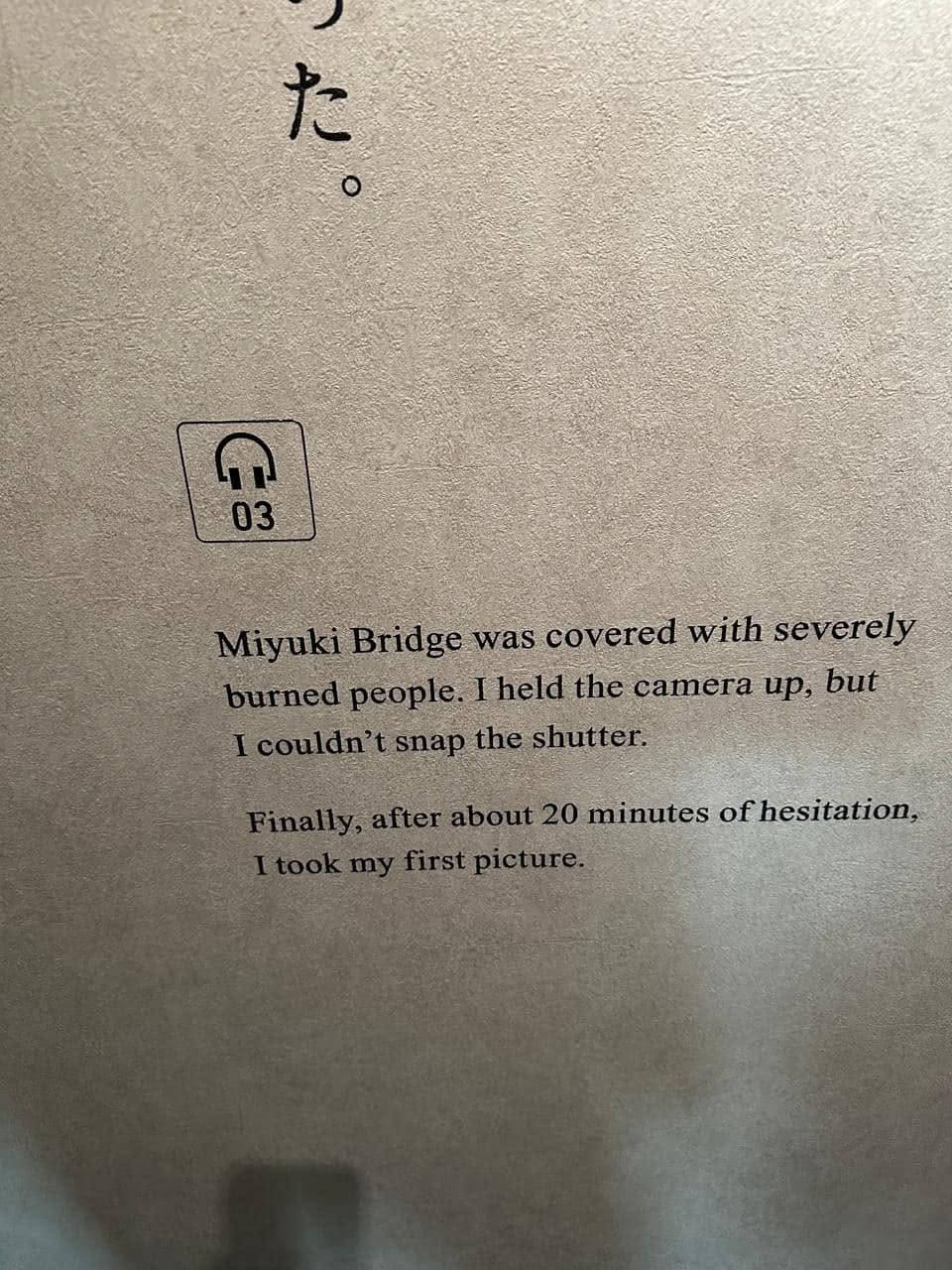
An unimaginable atrocity!
Hiroshima!
A beautiful city!
Surrounded by high hills.
Industrially developed.
And a Japanese military base, too!
That... Monday... in just a few minutes... destroyed the city and its inhabitants.
August 6, 1945. Time: 8:15 AM.
An American warplane dropped an atomic bomb named "Little Boy" over Hiroshima.
It was designed to detonate at an altitude of 1,900 feet—or 600 meters—above the ground.
Why was it designed to explode in mid-air?
We are familiar with Diwali firecrackers or crude homemade bombs.
This was an atomic bomb.
That is the crucial difference!
If it explodes in the air, its impact spreads over a much wider area.
That is why it was designed that way.
It detonated 43 seconds after being dropped from the plane.
Uranium is a radioactive material; a process of nuclear fission began within it.
At a temperature of 100 degrees, water begins to turn into steam.
Iron melts at 1,538 degrees.
Hardwoods like Burma teak burn at temperatures below 1,000 degrees.
The temperature of lava erupting from volcanoes is 1,200 degrees. The temperature on the Sun's surface is 5,500 degrees.
You might find this hard to believe.
When the atomic bomb detonated in the skies above Hiroshima—at an altitude of just half a kilometer—the temperature there soared past one or two million degrees.
On the ground—specifically in the area of the Hiroshima Industrial Promotion Hall—the temperature reached 4,000 degrees; that is as hot as the surface of the Sun.
The area was bustling with people at the time.
First came a massive, deafening sound.
When we hear a loud noise, our instinct is to recoil or move away.
This happens involuntarily.
That is exactly what the people there did.
Hearing a sound as if the sky itself were shattering, they instinctively ducked for a moment.
The next instant brought a strange, blinding light. Moments later, a massive column of smoke in the shape of a mushroom cloud—a sight never before seen or imagined—rose up.
The intense heat caused skin to burn, peel off, and hang in shreds. Many died instantly; in a way, they were the lucky ones.
Those who survived the initial blast endured a living hell; some died within a day, while others succumbed over the course of a week or ten days.
As their skin burned and sloughed off, many jumped into the nearby river seeking relief from the heat. Students working in the area, in particular, plunged into the river in droves.
It seemed as though God—or Nature—held a grudge against them. Had it been a freshwater river, it might have offered at least some measure of relief. But because it was saltwater, their flesh began to burn.
I feel disgusted with myself for writing this.
Please forgive me.
What happens when you marinate chicken in salt and chili and roast it over a fire?
It becomes Tandoori, doesn't it?
That was the plight of those unfortunate souls.
They were burned alive in those saline backwaters—a death one wouldn't wish even upon an enemy.
Innocent children were charred to cinders because of the sins committed by their country's military rulers.
The bomb explosion generated a shockwave that radiated outward in all directions at supersonic speeds—faster than the speed of sound.
This created immense pressure—pressure powerful enough to bring down massive structures. That is the nature of such an explosion.
Moments later, the situation reversed completely.
A low-pressure zone replaced the high-pressure zone.
Objects were scattered outward during the high-pressure phase and then pulled inward when the low pressure set in. Shattered stones and metal fragments turned into projectiles, destroying large buildings.
Added to this was the radiation.
I will write about its effects in the next post.
Thousands perished within five to ten seconds due to the heat and the blast wave.
Those who jumped into the river died just moments later.
Some people's eyeballs were forced out of their sockets.
This was caused by the extreme pressure and intense heat. Those who ran with their eyeballs bulging out, those who jumped into the river—they all perished.
Approximately eighty thousand people died on the very day the bomb exploded.
They were the lucky ones!
You will understand why I say this if you read the next post. Those who survived endured hellish suffering before eventually dying. Details on that will follow in another post.
Reading this might raise various questions in your mind—or rather, it *should* raise them.
The deeper you think, the more questions will arise.
I am ready to answer your questions.
Please post them.
This is the second post in the series.
Do read the first one.
And look out for the upcoming posts as well.
Morning... Does anyone drink beer early in the morning?

The criminal has immense confidence in his own cleverness.
An unimaginable atrocity!
Hiroshima!
A beautiful city!
Surrounded by high hills.
Industrially developed.
And a Japanese military base, too!
That... Monday... in just a few minutes... destroyed the city and its inhabitants.
August 6, 1945. Time: 8:15 AM.
An American warplane dropped an atomic bomb named "Little Boy" over Hiroshima.
It was designed to detonate at an altitude of 1,900 feet—or 600 meters—above the ground.
Why was it designed to explode in mid-air?
We are familiar with Diwali firecrackers or crude homemade bombs.
This was an atomic bomb.
That is the crucial difference!
If it explodes in the air, its impact spreads over a much wider area.
That is why it was designed that way.
It detonated 43 seconds after being dropped from the plane.
Uranium is a radioactive material; a process of nuclear fission began within it.
At a temperature of 100 degrees, water begins to turn into steam.
Iron melts at 1,538 degrees.
Hardwoods like Burma teak burn at temperatures below 1,000 degrees.
The temperature of lava erupting from volcanoes is 1,200 degrees. The temperature on the Sun's surface is 5,500 degrees.
You might find this hard to believe.
When the atomic bomb detonated in the skies above Hiroshima—at an altitude of just half a kilometer—the temperature there soared past one or two million degrees.
On the ground—specifically in the area of the Hiroshima Industrial Promotion Hall—the temperature reached 4,000 degrees; that is as hot as the surface of the Sun.
The area was bustling with people at the time.
First came a massive, deafening sound.
When we hear a loud noise, our instinct is to recoil or move away.
This happens involuntarily.
That is exactly what the people there did.
Hearing a sound as if the sky itself were shattering, they instinctively ducked for a moment.
The next instant brought a strange, blinding light. Moments later, a massive column of smoke in the shape of a mushroom cloud—a sight never before seen or imagined—rose up.
The intense heat caused skin to burn, peel off, and hang in shreds. Many died instantly; in a way, they were the lucky ones.
Those who survived the initial blast endured a living hell; some died within a day, while others succumbed over the course of a week or ten days.
As their skin burned and sloughed off, many jumped into the nearby river seeking relief from the heat. Students working in the area, in particular, plunged into the river in droves.
It seemed as though God—or Nature—held a grudge against them. Had it been a freshwater river, it might have offered at least some measure of relief. But because it was saltwater, their flesh began to burn.
I feel disgusted with myself for writing this.
Please forgive me.
What happens when you marinate chicken in salt and chili and roast it over a fire?
It becomes Tandoori, doesn't it?
That was the plight of those unfortunate souls.
They were burned alive in those saline backwaters—a death one wouldn't wish even upon an enemy.
Innocent children were charred to cinders because of the sins committed by their country's military rulers.
The bomb explosion generated a shockwave that radiated outward in all directions at supersonic speeds—faster than the speed of sound.
This created immense pressure—pressure powerful enough to bring down massive structures. That is the nature of such an explosion.
Moments later, the situation reversed completely.
A low-pressure zone replaced the high-pressure zone.
Objects were scattered outward during the high-pressure phase and then pulled inward when the low pressure set in. Shattered stones and metal fragments turned into projectiles, destroying large buildings.
Added to this was the radiation.
I will write about its effects in the next post.
Thousands perished within five to ten seconds due to the heat and the blast wave.
Those who jumped into the river died just moments later.
Some people's eyeballs were forced out of their sockets.
This was caused by the extreme pressure and intense heat. Those who ran with their eyeballs bulging out, those who jumped into the river—they all perished.
Approximately eighty thousand people died on the very day the bomb exploded.
They were the lucky ones!
You will understand why I say this if you read the next post. Those who survived endured hellish suffering before eventually dying. Details on that will follow in another post.
Reading this might raise various questions in your mind—or rather, it *should* raise them.
The deeper you think, the more questions will arise.
I am ready to answer your questions.
Please post them.
This is the second post in the series.
Do read the first one.
And look out for the upcoming posts as well.
This is the gist of the report submitted to U.S. President Truman by the country's Interim Committee.
Based on this report, U.S. President Harry S. Truman made the decision to use the atomic bomb against Japan on July 25, 1945.
The U.S. Air Force made meticulous preparations for this operation.
The setting was the Pacific Ocean—specifically Tinian Island, home to a U.S. Air Force base. Paul Tibbets was selected as the pilot for the B-29 bomber and underwent training on how to drop the bomb and how to maneuver the aircraft away at high speed immediately after the drop.
Tibbets named the bomber after his mother; thus, the B-29 became the "Enola Gay."
The atomic bomb, which relied on the process of Uranium-235 nuclear fission, was named "Little Boy." It was loaded onto the Enola Gay.
At 2:45 AM on August 6, Tibbets took off from Tinian Island in the bomber named after his mother. After traveling a distance of 2,400 kilometers, he arrived over Hiroshima.
It was 8:15 AM.
The Japanese people start their day early. Hundreds of middle and high school students were engaged in assigned mobilization tasks, assisted by their teachers. There was heavy traffic on the roads.
Tibbets was flying at an altitude of 31,000 feet—approximately ten kilometers—above the ground.
The bomb had to be dropped in the center of the city to ensure maximum impact.
Below, in the heart of Hiroshima, the high dome of the Industrial Promotion Hall was visible, along with a T-shaped bridge nearby. The bridge was targeted for the bomb drop. The bomb was designed to detonate before hitting the ground—specifically, at an altitude of 1,900 feet.
After being released, the bomb would detonate in mid-air—at that 1,900-foot altitude—after 43 seconds.
In the meantime, the pilot had to fly the aircraft to a safe distance. Tibbets underwent extensive training for this maneuver. After dropping the bomb, he banked the aircraft away at a 155-degree angle, flying at a speed of 560 kilometers per hour. By the time the bomb exploded, the aircraft was approximately 12 kilometers away. However, the shockwave from the blast caused the plane to be violently buffeted. Thanks to his rigorous training, he managed to survive the danger.
Only later did Tibbets realize the scale of the carnage his bomb had caused in Hiroshima—how many thousands of innocent lives had been snuffed out.
He defended his actions, stating, "I did my duty. The war ended because I dropped the bomb; otherwise, the devastation would have been ten times worse."
He rose through the ranks of the US Air Force, eventually becoming a Brigadier General and then a Major General.
He passed away in 2007 at the age of 92.
To some, Tibbets was a monster in human form.
To others, he was a hero.
Before his death, he requested that his name not be inscribed on his tombstone.
Sunday... 8:15 AM. An unprecedented explosion in the sky.
People in the industrial hall area instinctively leaned forward. A massive, strange light.
Those unfortunate souls could not have imagined at that moment that the light would plunge their lives into darkness.
Details in upcoming posts.
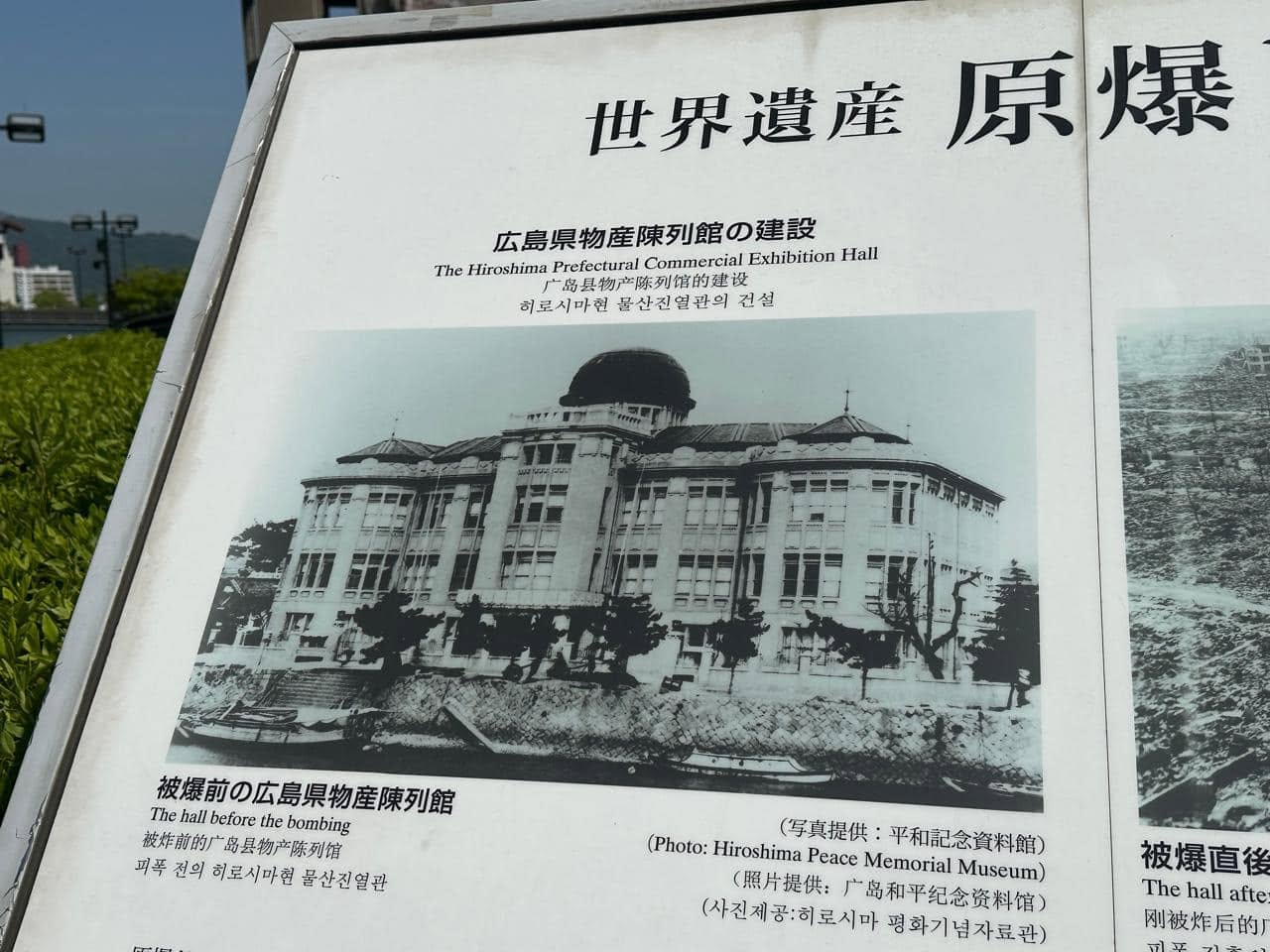


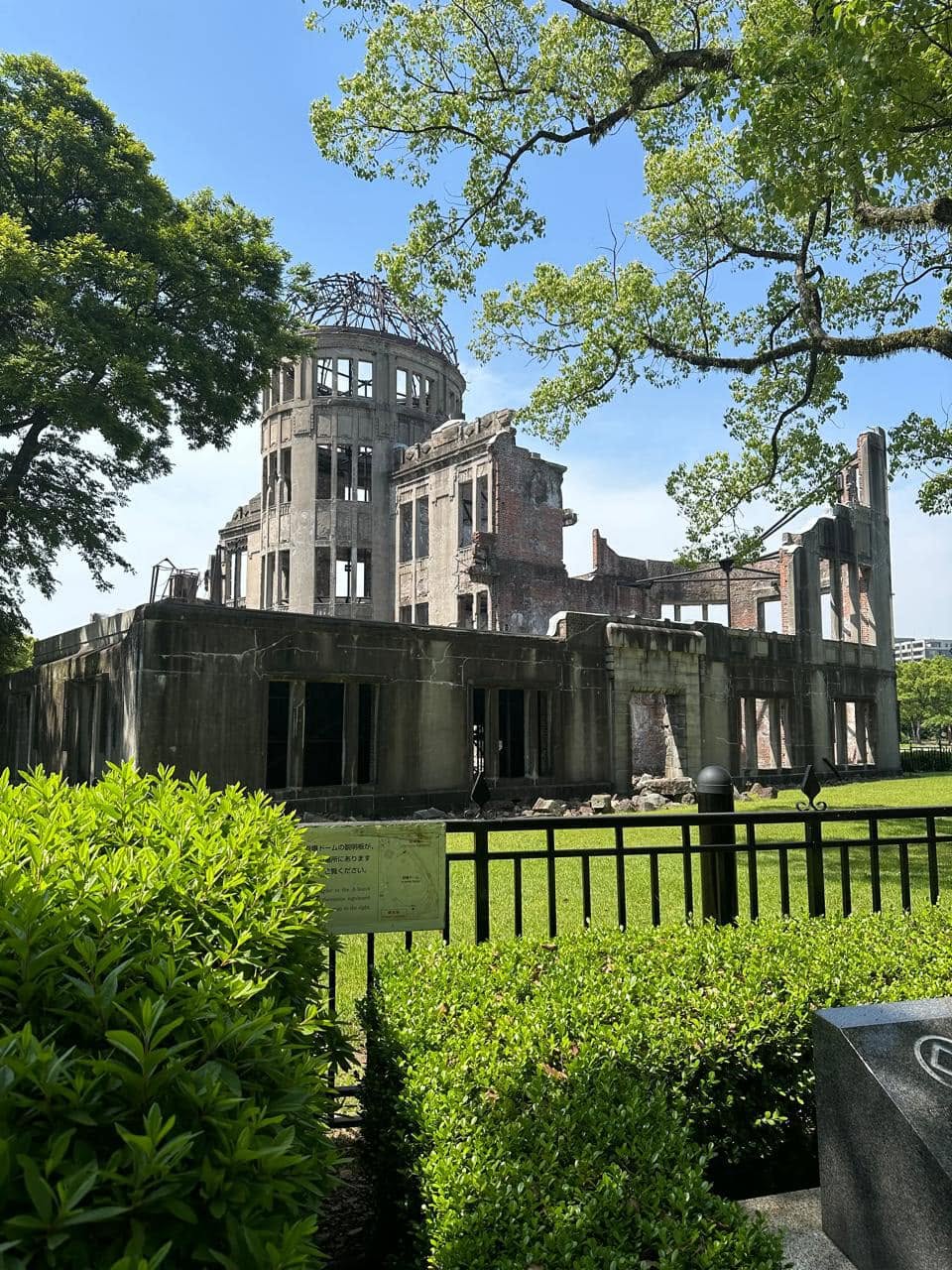
A matter of questioning.
2 What are governments doing to stop them.
Things that are being talked about.
1. What is a rave party?
2. Fifty lakhs.
3 Nude dancing.
4 Snake venom.
5. Where is Hema?
We get what we want.

On A Ventilator Two Weeks Before Exams | Kirpan Kaur Khanuja Passed Out SSC || Yuva
*From Classroom to Corporate world*
*From Classroom to Corporate world*
Crafting Visions:
I told you to walk in the sun, but... not *quite* like this!

Do you want me to write about Andhra Pradesh politics?
...and intense opposition to another...
This is the situation for the vast majority of people in Andhra Pradesh.
Naturally, in such a scenario, people’s thoughts—poles apart like the North and South Poles—align in favor of their own leader or party and against the opposing leader and their party.
The 'Tamil' influence...
The situation that existed in neighboring Tamil Nadu twenty years ago is now playing out in Andhra Pradesh.
Karunanidhi and his party, the DMK; Jayalalithaa and her party, the AIADMK—the animosity between them was so intense that it was like a powder keg waiting to explode.
Kings are gone... kingdoms and empires have vanished. Whether one likes it or not, our country is now a democracy.
It is governed by a Constitution that sets the standards.
Administration must proceed according to that Constitution.
A king...
A rival king in the neighboring realm...
Hostility between the two.
What used to happen then?
One had to eliminate the rival king...
...or force him into submission.
...That was the law of monarchy.
That era has passed.
How can one insist on remaining stuck in the past when times have changed?
In a democracy... there is a ruling party... and an opposition party...
That is how it is.
That is how it must be.
Until a leader emerges who commands the approval of one hundred percent of the people and secures every single vote... this is how it will remain.
Does such a leader exist?
Or will one be born in the future?
It is not possible.
Isn't that so?
One can secure a majority of seats in elections by winning the majority of votes. Fewer votes can lead to fewer seats.
That is a different matter.
The media and intellectuals are confused themselves and are confusing everyone else.
That is the root of the problem.
That is why a war-like atmosphere prevails in Andhra Pradesh—a brand-new kind of conflict in a Telugu land that has witnessed historic battles like the Battle of Bobbili and the Battle of Palnadu.
It is incorrect to judge a party's greatness solely based on the number of seats won in the Assembly or Parliament.
It is wrong to assume a party is finished just because it secured fewer seats in a particular election.
Look at the Bharatiya Janata Party (BJP); there was a time when it won only two seats in the Lok Sabha.
Back then, there were people who thought the party was finished.
Now, the BJP is in power.
This means it secured more votes and won more seats compared to other parties.
At the same time, assuming that the BJP now dominates everything completely would also be an incorrect notion.
The BJP is in power having secured forty percent of the vote—which is more than what other parties achieved.
Even though Modi and other BJP leaders have strived for a "Congress-mukt Bharat" (Congress-free India), the Congress party still exists.
It may be weaker compared to the past.
Yet, it recently won elections in two states, indicating that a certain segment of the public still supports the Congress.
Therefore, receiving fewer votes does not mean a party is finished, nor does winning an election mean that a single party is all-powerful.
This is a fundamental principle of democracy.
Parties continue to survive as long as they retain the support of certain sections of the public. If a party ceases to exist, it implies there is no longer a segment of the public that supports it.
For such a situation to arise, it is usually the result of the party's or its leader's own self-inflicted errors.
The point I am trying to make is this: the 'other party' is merely the *opposition*, not an *enemy camp*.
An 'enemy camp' implies the kind of enmity seen in the era of kings—
—a mindset intent on completely annihilating the adversary.
This approach failed in Tamil Nadu politics. Despite years of attempts by Karunanidhi to finish off Jayalalithaa and her party—and vice versa—none of those efforts succeeded.
Karunanidhi’s attitude toward Jayalalithaa only deepened the affection her supporters held for her.
Similarly, the actions Jayalalithaa took against Karunanidhi only endeared him further to his own supporters.
In a democracy, the opposition is not a party to be 'finished off'—
—political battles against the opposition must be fought, certainly.
But one should also try to win over the opposition's supporters; that is true statesmanship.
Political leaders and parties in Andhra Pradesh—and, above all, the public—have failed to learn the fundamental lessons taught by Tamil Nadu politics.
The same failed narrative of political vendetta seen in Tamil Nadu twenty years ago is now playing out in Andhra Pradesh.
The less said about the media, the better.
Every media outlet has—not just recently, but for a long time—been colored by partisanship.
I had hoped that, at the very least, neutral intellectuals would offer an objective analysis. However, the analyses emerging over the past few weeks have been peculiar—even bizarre. I cannot tell if the analysts have secretly sold out, are acting out of fear, or are simply saying things to garner views; but from what I have seen, there hasn't been a single accurate analysis regarding the Andhra Pradesh elections.
There is no attempt to present the actual facts to the public.
Would you like me to provide an analysis for the coming three or four days?
Or would you say, "No, sir"?
You tell me.
If the majority wants it, I will start tomorrow.
There is so much to write about Japan.
The life skills of the Japanese people—these are lessons everyone needs.
Furthermore, regarding the atomic devastation of Hiroshima—there are many facts that would leave you stunned and numerous lessons to be learned.
It would require at least six or seven posts.
My concern is that if I write about Andhra Pradesh, the focus on the lessons from Japan might diminish.
From my home in Hyderabad—at my desktop computer—to all of you...
Good morning.
Just landed in Hyderabad.
The seatbelt sign remained on.
There were strong winds over the ocean between Japan and Chennai.
And these were winds at an altitude of eleven kilometers, causing the plane to shake.
It is unclear how long this will last; traveling under such conditions is risky.
After a winding journey, the flight landed at Kuala Lumpur Airport a short while ago. The flight to Hyderabad is coming up soon. Time for a bit of rest now!

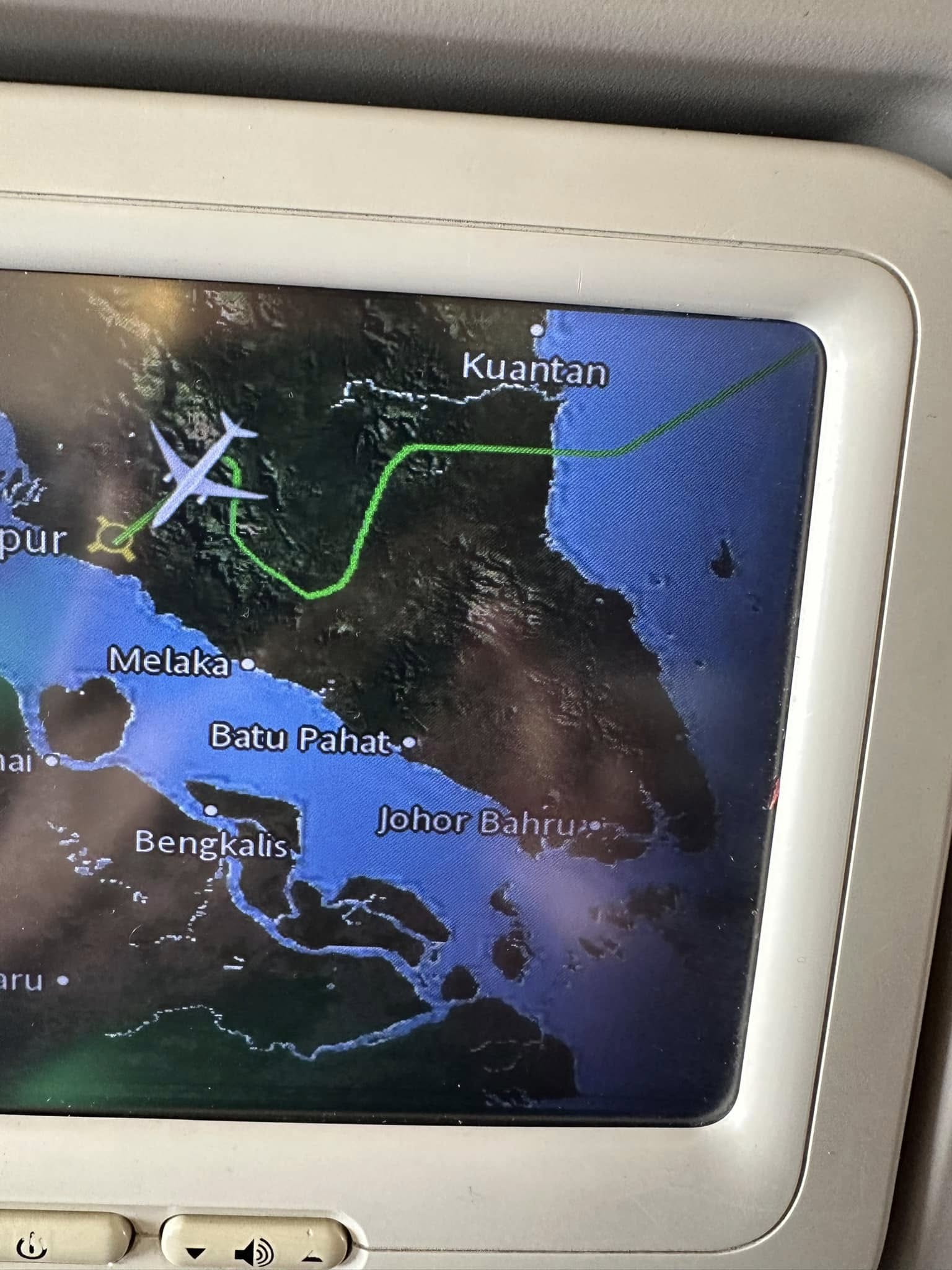
The flight is near Malaysia.


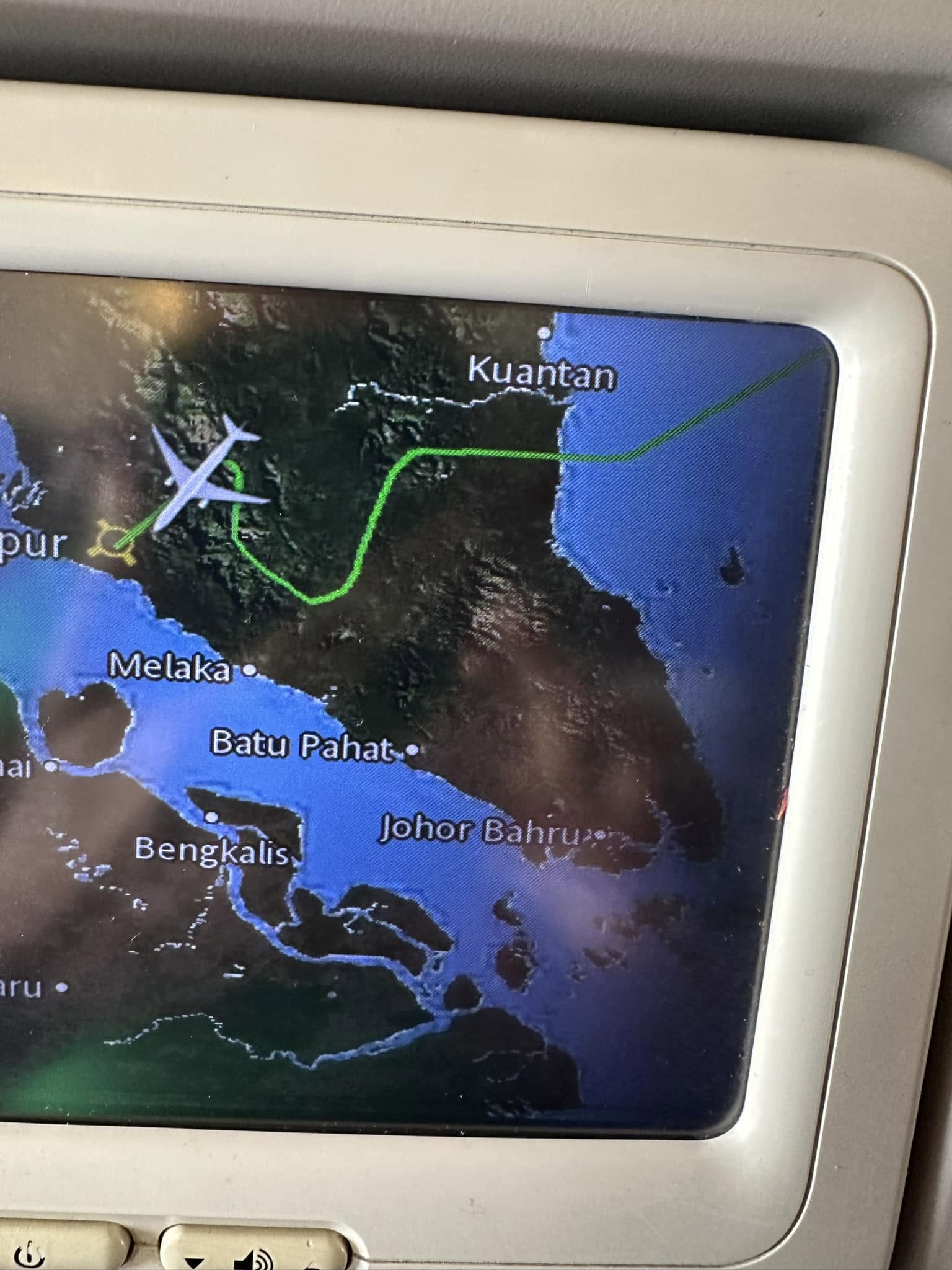
The flight departed from Osaka (Japan) at 9:50 AM (6:20 AM IST).
The flight we are currently on is experiencing significant turbulence—lasting over an hour.
This delayed the meal service.
The turbulence has subsided a bit now. (There is Wi-Fi on board, which allows me to make this post.) The plane is flying at a speed of 1,000 km/h at an altitude of nearly 40,000 feet, near the Philippines!
Strong winds blowing from the Far East towards the Pacific are the cause of both the turbulence on our flight and the incident on yesterday's Singapore flight! (This information was provided by Alok, a former student of Slate School who is a pilot.)
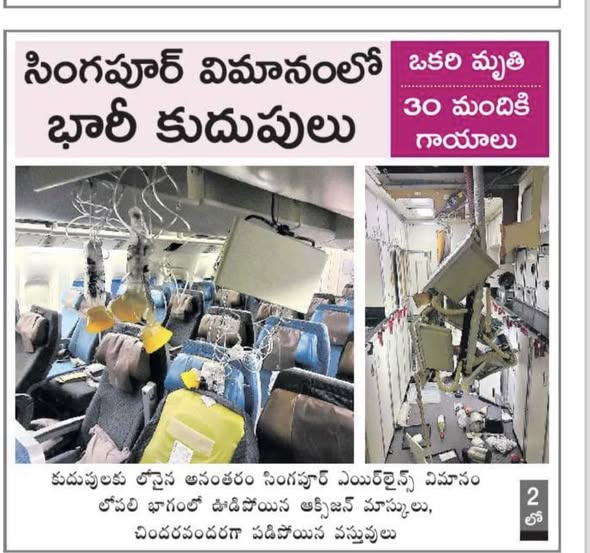

The main reason is masks!
Starting back to Hyderabad






Bullet train - Japan
Bullet train - cleanliness.
On board bullet train. Osaka to Hiroshima. Japan
Little boy is a little boy !




“By betting! For betting! Because of betting!”
An analysis of election results by some intellectuals! Is there no tomorrow?Is there no fear of losing one's reputation then?



The flight time from Hyderabad to Malaysia is 4 hours.
Malaysia local time is two and a half hours ahead of us.
Travel time from Malaysia to Japan (Tokyo) is six and a half hours.
So, how much ahead of Japan's time should be than Malaysia?
Three and a half hours right?
But japan time is only one hour earlier than malaysia. ( three and a half hours ahead of IST )
The Japanese have set themselves up like that.
The sun rises at four in the morning. The day begins at six. The night closes at eight.
Save electricity ! Positive energy.
That's the wisdom of the Japanese.
(After calculating the latitude I know about land of midnight sun. Tokyo is just 36 degree North. And summer is yet to begin here. So please don’t get confused with summer day timings of high latitude areas of Europe / USA Canada. They have very short winter days. Here in Japan it’s not that extreme)
View from the hotel room at five in the morning.
His anger is his enemy.. His peace is his protection!
Is there no one who can tell this moral poem to the people of Palnadu village? Has Telugu race become a coward?
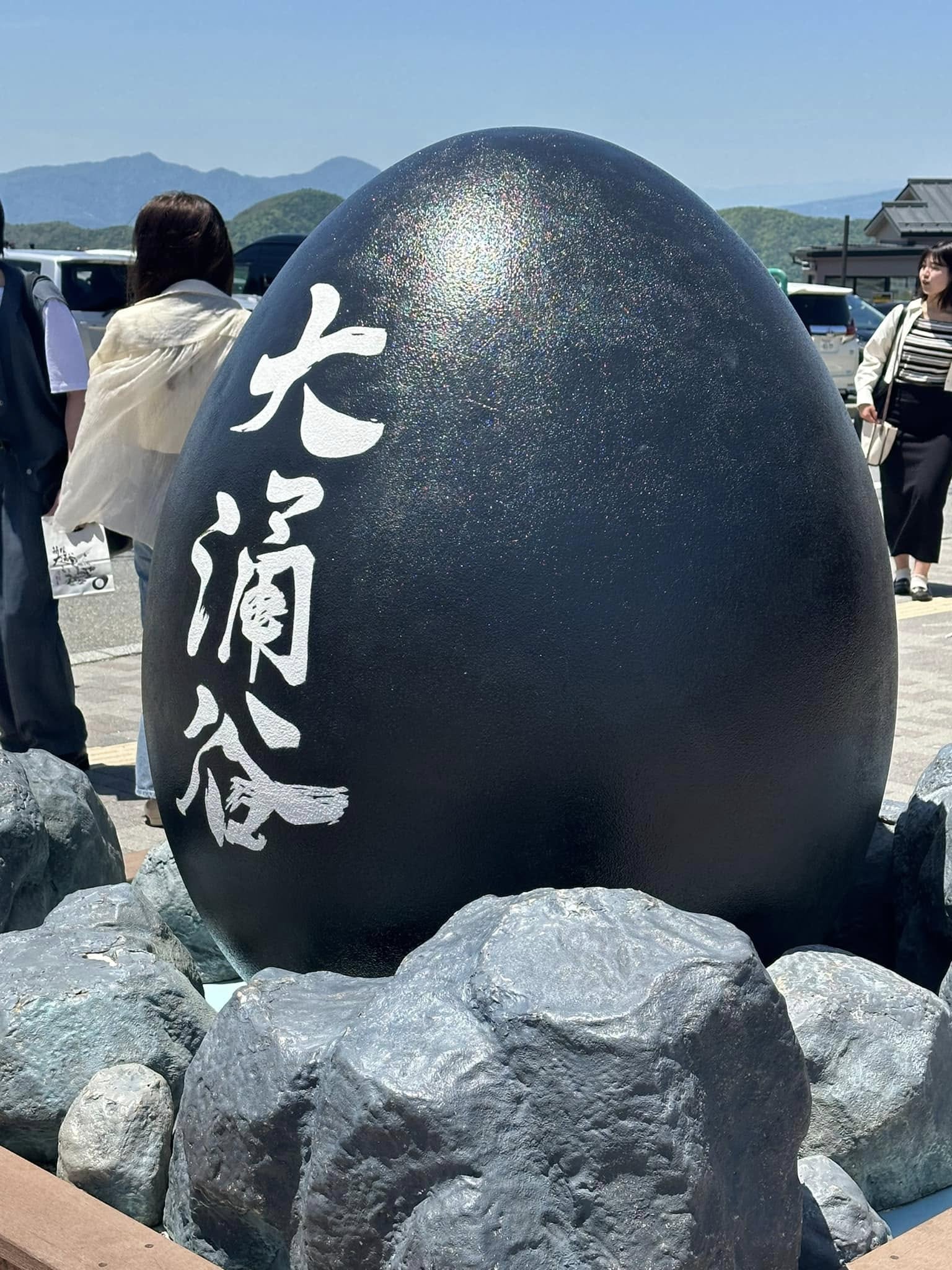
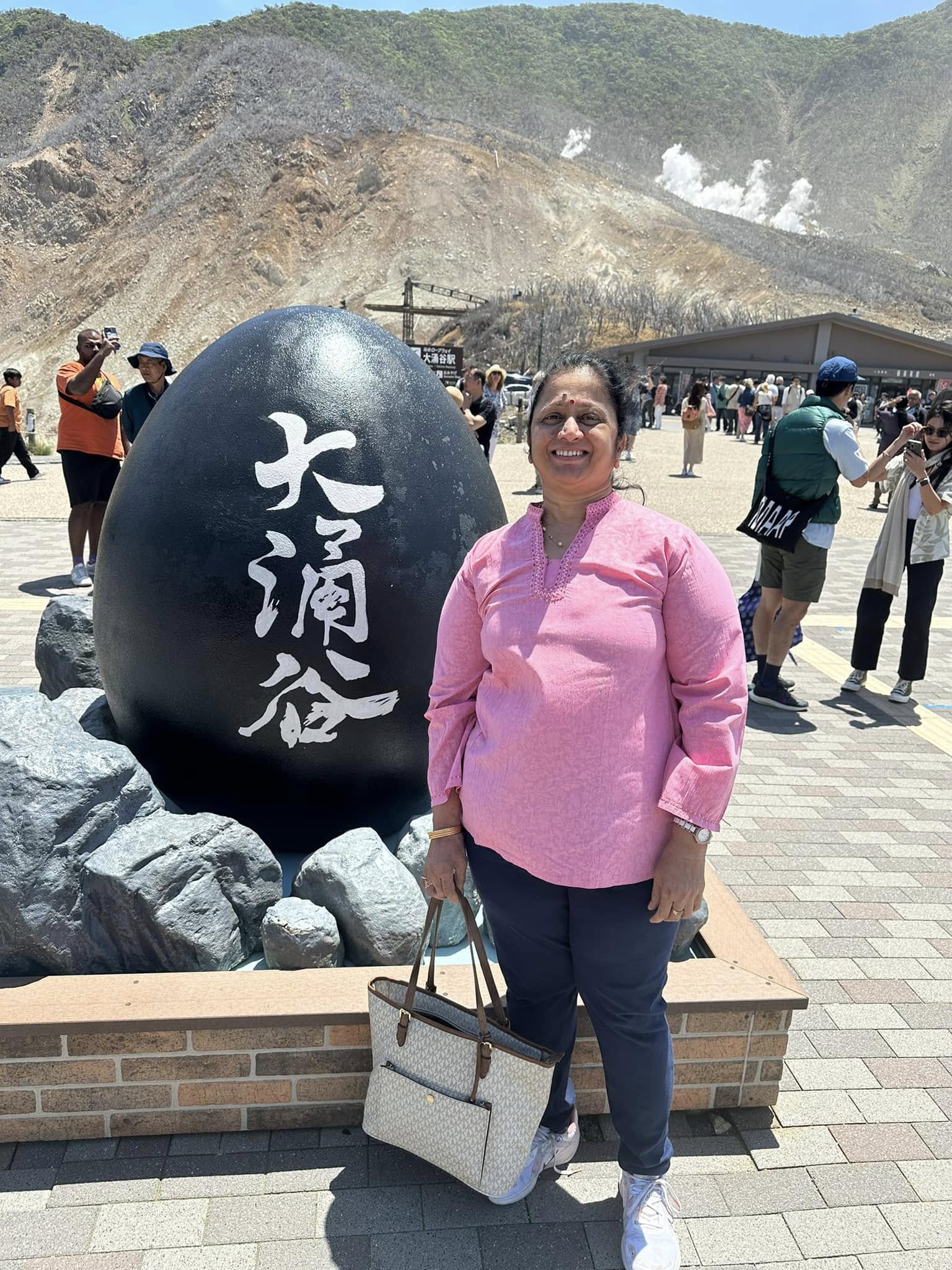
Black Egg
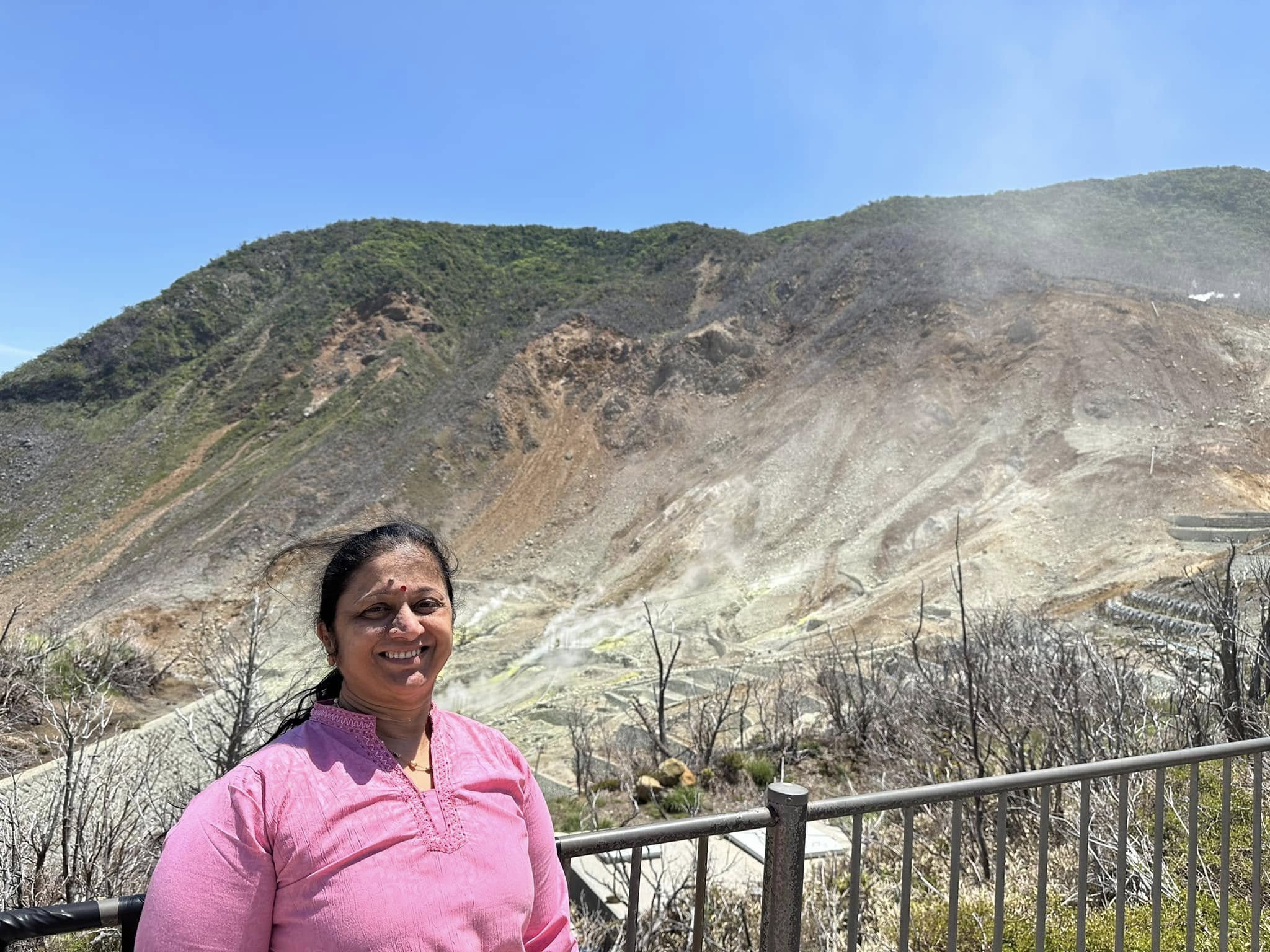
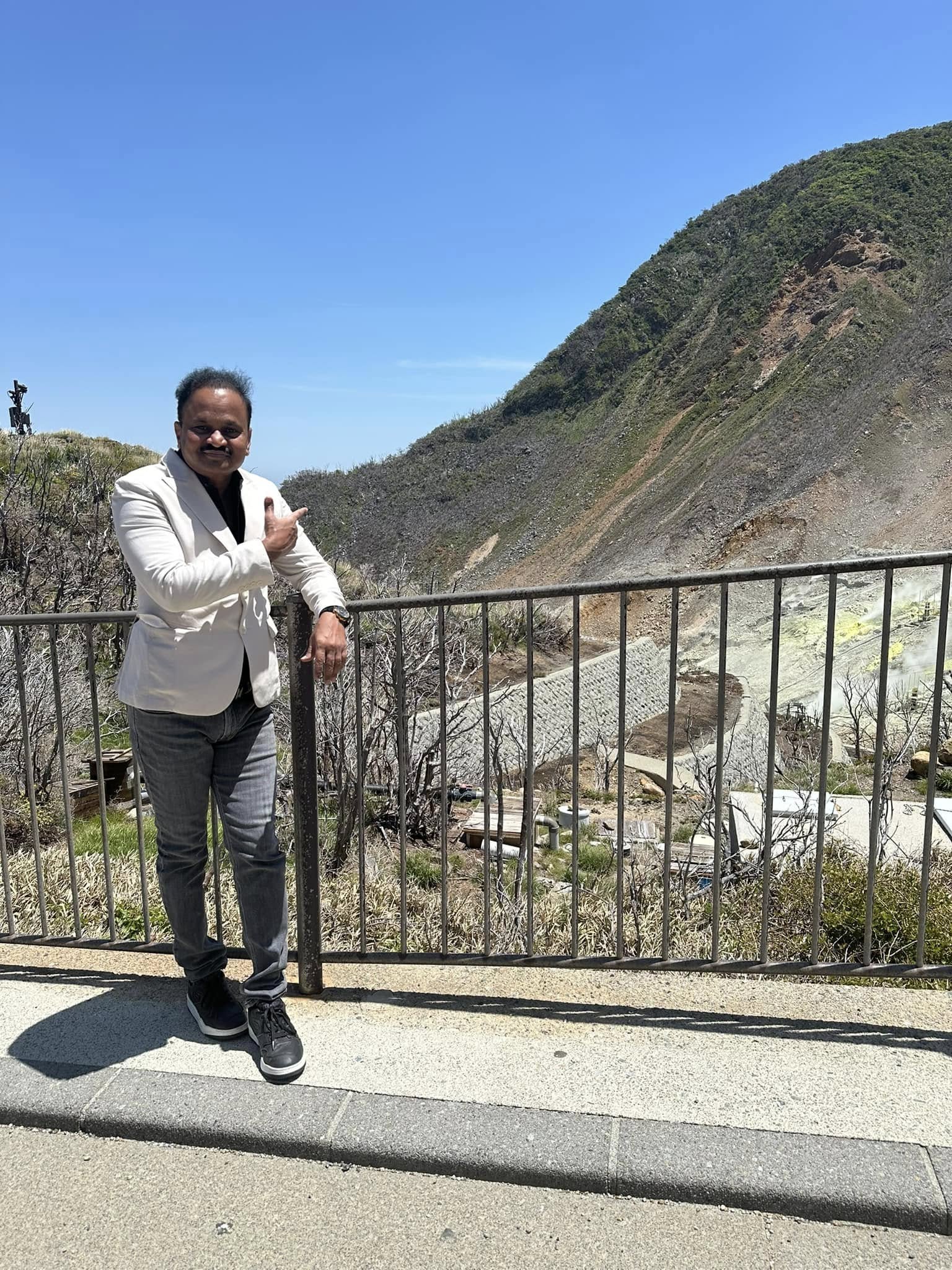
Sulphur vapours from valley
Tokyo Japan
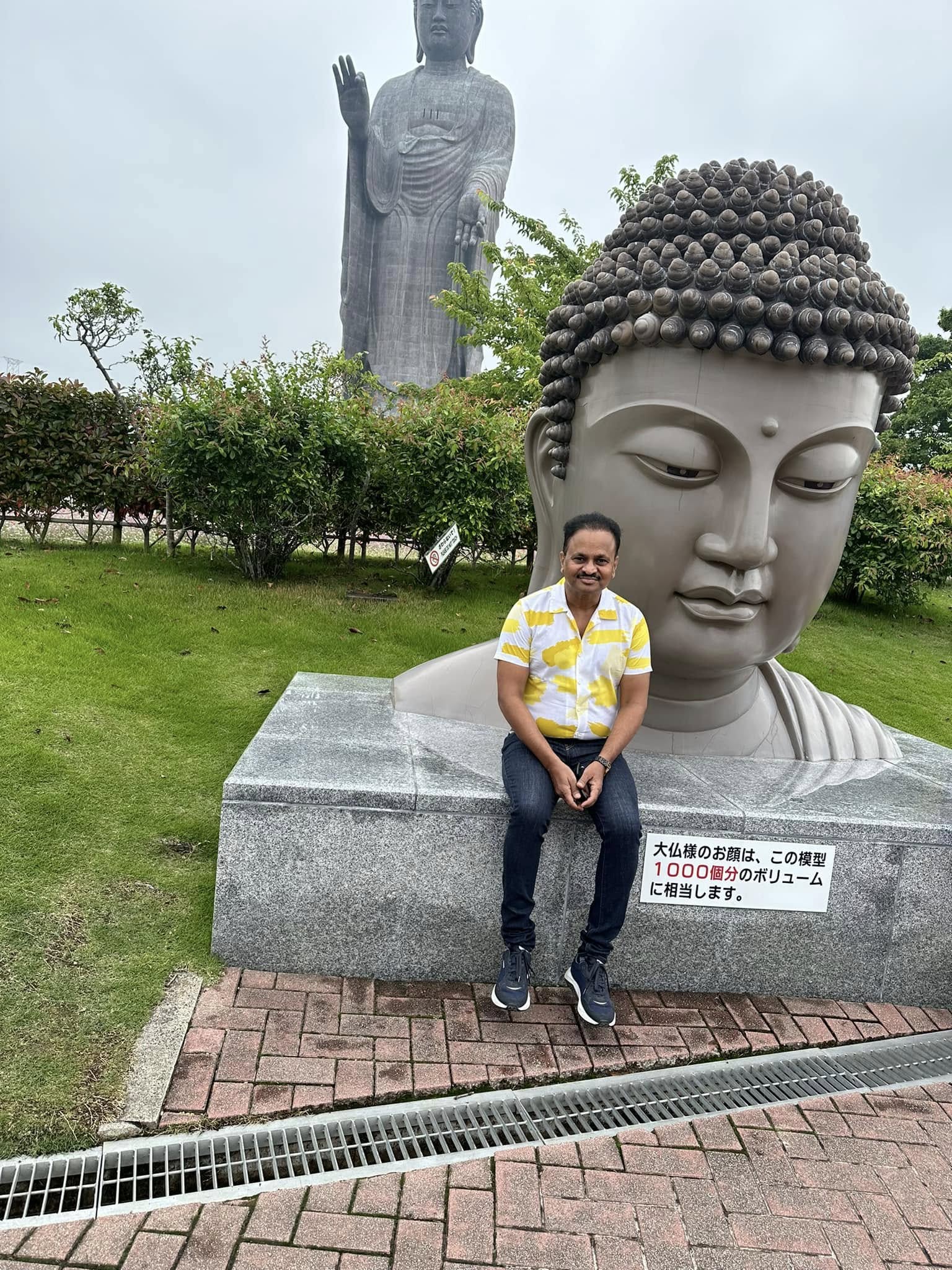
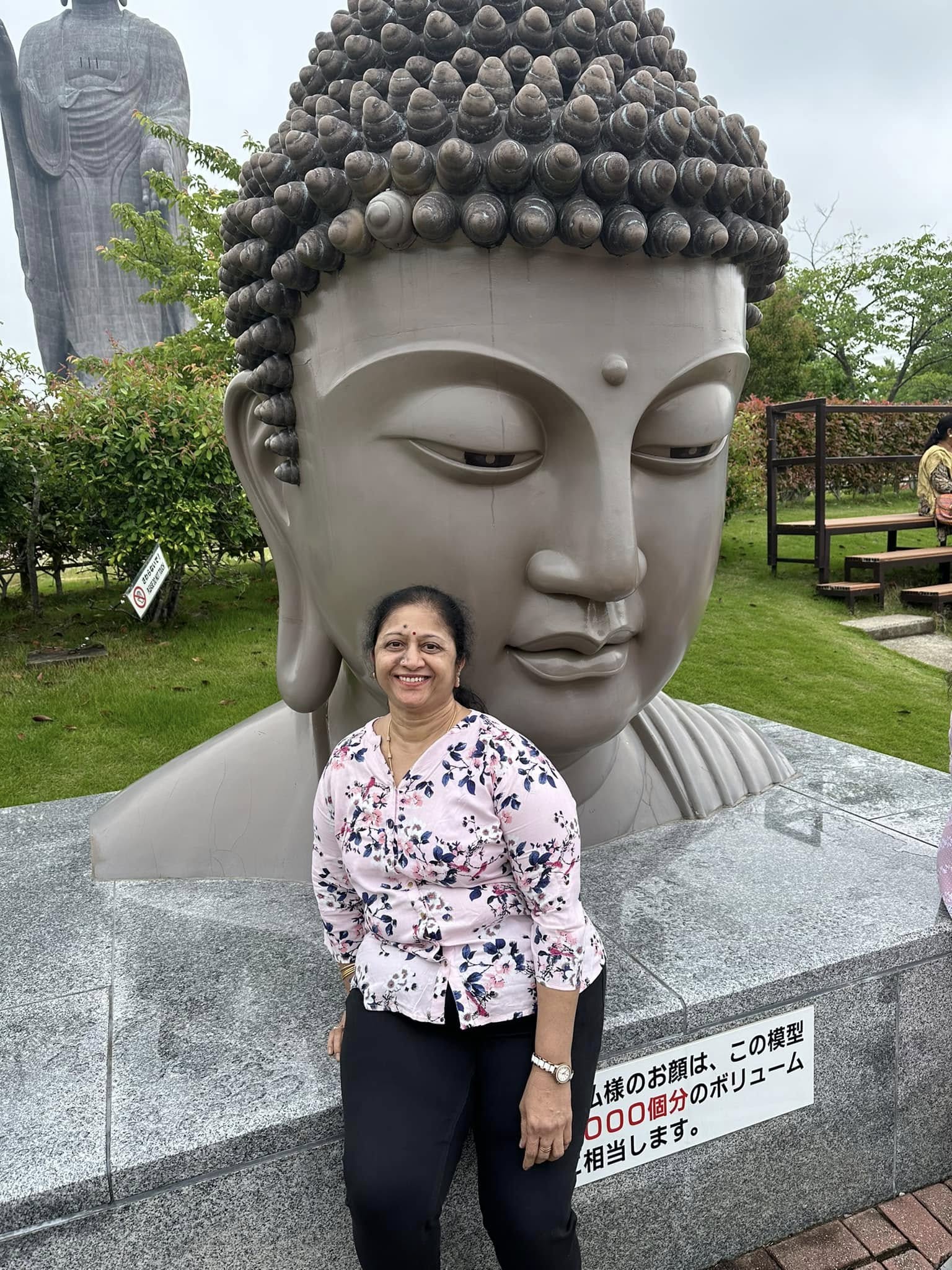
Buddha Statue, Tokyo
Shibuya Tokyo
Tokyo Shibuya Crossing
Shibuya Cross Tokyo Japan
I checked online before leaving Hyderabad—Hotel Nikko Narita, located near Narita Airport.<
It had a gym. I was ready in my workout gear by 5:00 AM.
Then came the disappointing news: there was no gym.
I couldn't find a taxi to take me to a nearby gym, either.
But who needs gym equipment?
I had determination, didn't I?
1. Incline, 2. Decline, and 3. Flat chest presses; 4. Bicep curls using the hotel table; 5. Bodyweight tricep dips off the same table—five variations in total. Four sets of 12 reps each—that’s 240 reps—all right there in the room.
When I couldn't find a spoon to mix my protein drink, I just used my finger.
Once I commit to something, there’s no backing down.
My brain has an inseparable bond with 3 AM.
It is 3 o'clock in Japan right now.
And just like that, I'm wide awake.
(I had gone to bed at 9:30 PM—which is 6:00 PM India time!)
Good morning.
On Board Malaysian Airlines - KL to Narrita ( Japan ). Flying at a height of 38,000 feet above MSL - outside temp - Minus 48 C - but still connected to world through Aircraft WiFi
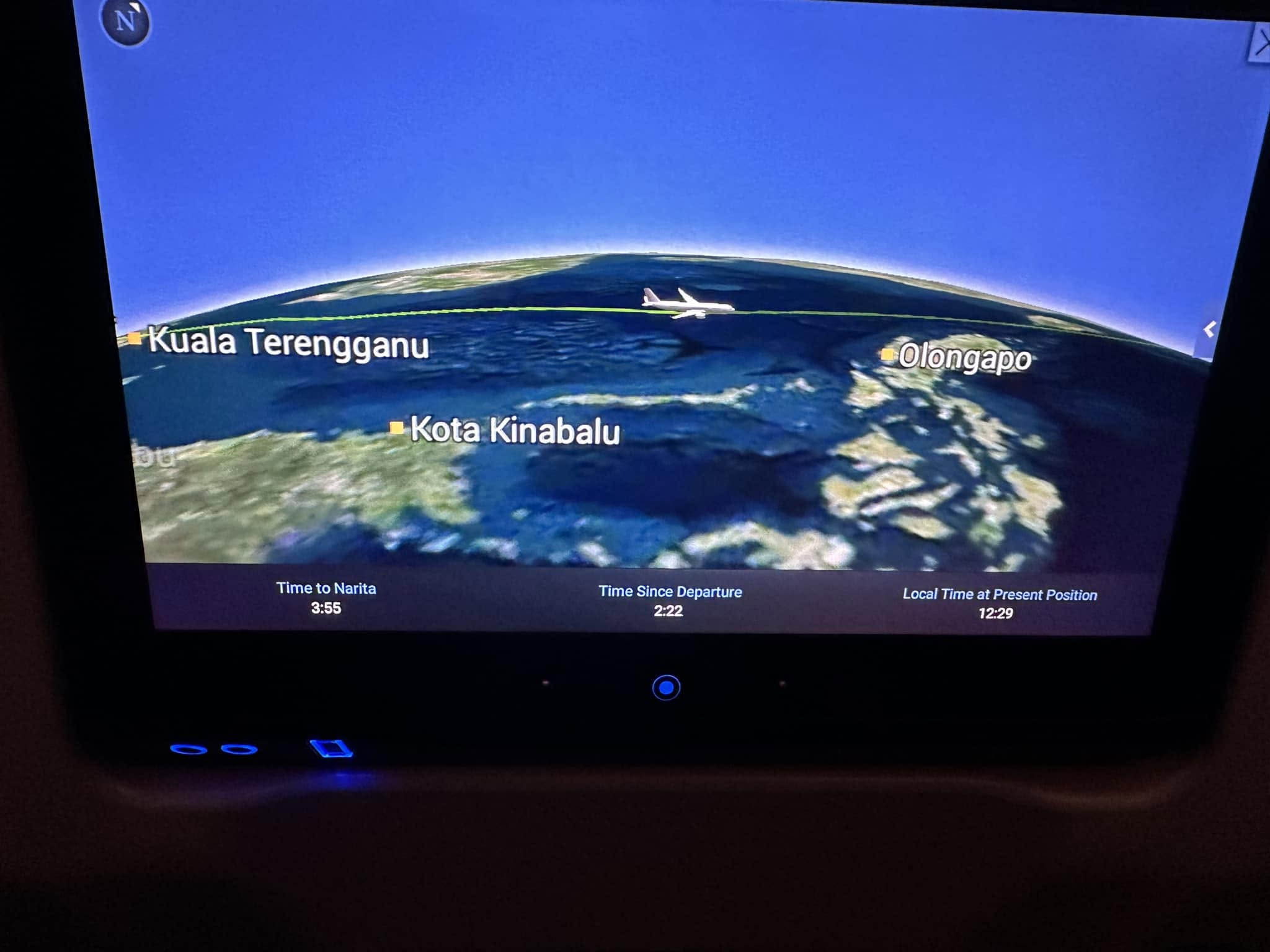

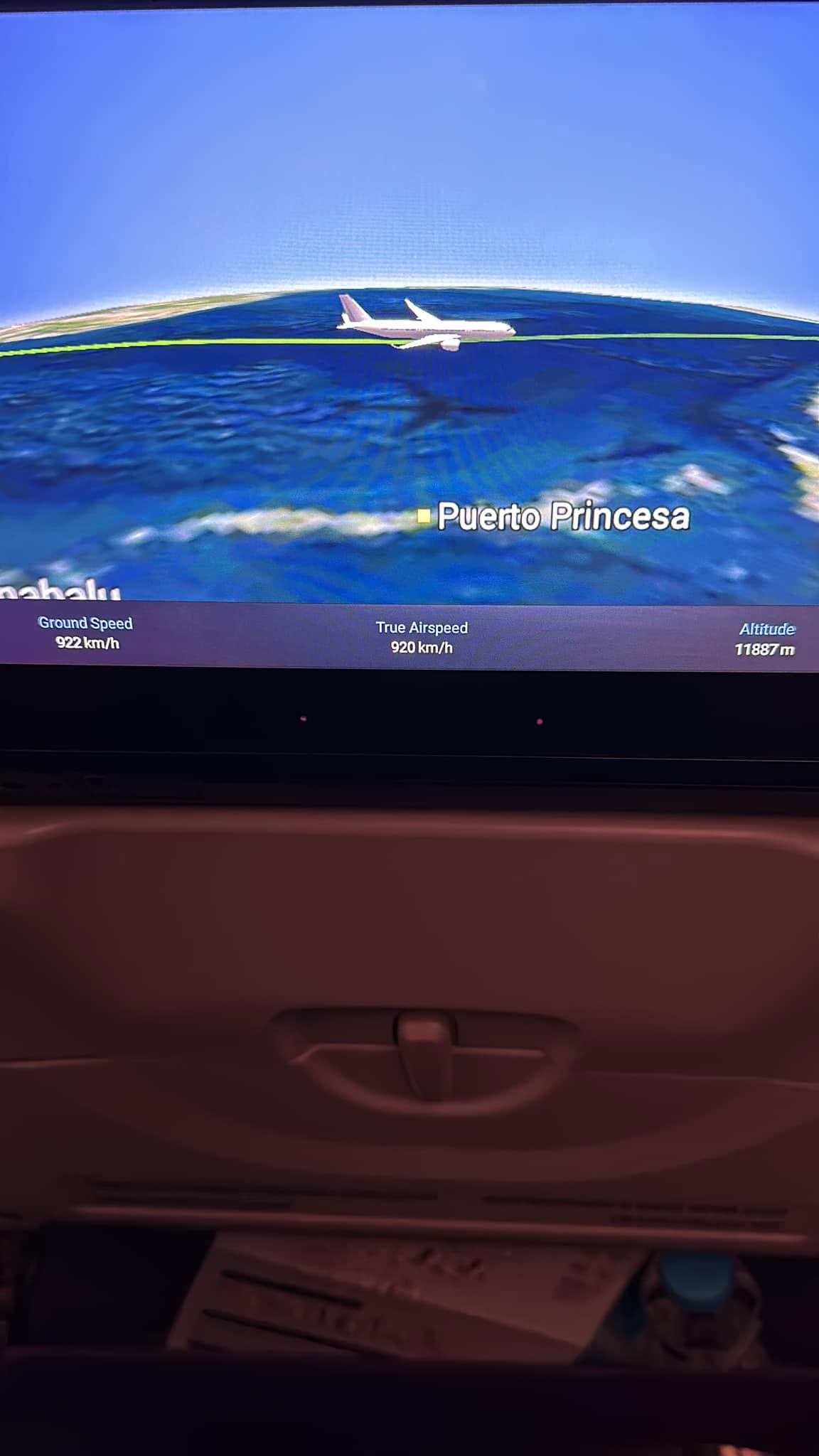

"Abhimatam" refers to what we desire or wish to happen. The world currently stands at a critical crossroads.
On one hand, there is the tsunami created by artificial intelligence...
On the other, the looming clouds of a Third World War.
In such circumstances, it is my view that there needs to be a stable government at the Centre.
You might recall a past post of mine where I expressed a firm belief: the primary reason educational institutions in our country remained closed for two years was a specific EdTech company and the Delhi Chief Minister.
I do not have concrete proof to substantiate this; it is simply my personal conviction.
Against this backdrop, when that EdTech company faced trouble and that leader was jailed amidst corruption allegations, I felt, "He is reaping what he sowed; it serves him right." This is my personal opinion.
However, information gathered from various sources suggests that his arrest actually generated sympathy among the people of Delhi. Indications are that while the BJP might have otherwise swept all the seats in Delhi, the tide is now turning in favor of the INDIA alliance.
The information I received might be incorrect, though I gathered it from diverse sources, including neutral observers.
I am not a political analyst.
I haven't conducted any surveys.
It was merely a lucky guess that my analysis prior to the Telangana Assembly elections turned out to be accurate.
The situation is different this time; Modi's supporters are absolutely determined to see their party win at the Centre. At the same time, those who oppose Modi are also hoping that the BJP does not win.
As for Andhra Pradesh, it goes without saying—there is intense suspense and tension surrounding the election results; just yesterday, one can only imagine the surge of stress hormones (cortisol) coursing through so many people.
For quite some time, many friends—especially on Messenger—have been asking me to provide an analysis of the election.
Due to my upcoming trip, I won't be able to type out many messages for the next ten days.
After working hard all year, I need these ten days in the summer to relax and find some mental peace.
I had posted a few days ago asking to be spared this task, explaining that if I were to predict a specific party's victory or defeat, supporters might get hurt or misunderstand me.
Since then, however, I’ve received numerous requests saying, "Sir... please... don't dishearten us."
So, acceding to the public's wishes, I have posted an analysis.
I also invited everyone to post their own opinions if they disagreed with mine.
With the exception of one or two, everyone commented with great dignity.
Thank you.
Does my analysis differ from your own view?
It’s quite simple, really...
As I mentioned earlier, I haven't conducted any survey.
I am not a political analyst.
Just assume my analysis is wrong...
It will put your mind at ease.
Enjoy the summer happily with your family. Take your children to your respective villages. Encourage them to interact with the older generation. Get them to read storybooks. Teach them rural sports. Keep them away from mobile phones.
Happy summer holidays!
Another twenty days... If my analysis turns out to be wrong, I am ready to apologize. I have no ego.
And if it turns out to be correct?
For the past four years, I have been sounding early warnings... which led to public misunderstandings... resulting in accusations and personal attacks against me...
... "Does the coronavirus die if you stand in the sun? He is against vaccines... He claims vaccines cause side effects... He says Metformin causes complications... It's just his craze for publicity"... So many... so many accusations and insults...
They call me 'Bikari' (beggar)... say my path is a barren desert...
... Yet, I feel no frustration... my joy remains undiminished... I feel no fatigue at all...
... In truth, my name is 'Ananda Vihari' (one who wanders in bliss).
I will never come before you... never visit your home... never ask for any favors.
Just me... and my hard work... that is all!
I shall take my leave now, sir!
May everyone—along with their families and children—live happily and peacefully.
*Sarve Jana Sukhino Bhavantu* (May all people be happy)!
That boy used to score no more than 20% marks.
There was a high probability of him failing the 10th-grade examinations.
We gave him special attention and guidance.
The boy, too, worked hard with determination.
In the end, he passed with 40% marks.
Many parents fail to understand their children.
That boy's father was one such person.
He worked as a police constable.
This incident took place last year at Slate Tirupati CBSE School.
When the Class 10 results were announced, all of us teachers were delighted that the boy had passed.
However, his father called our Principal and complained, asking, "Only 40% marks?" He accused the school of cheating them and claimed that we had not taught the boy properly. One of his relatives even posted a similar comment on my Facebook page.
We invited the father to the school and refunded the entire fee he had paid for his son's 10th-grade education.
We told him to consider the effort we had put into improving the boy's score from 20% to 40% as our Guru Dakshina (teacher's offering). We blessed the student, wishing him success in Intermediate and beyond, and hoped he would build a bright future.
We have only one life.
I firmly believe in sincerity and hard work.
I simply cannot tolerate harsh or disrespectful words.
That is Vasireddy Amarnath.
The CBSE Class 10 results for this year were announced yesterday. Remembering last year's unpleasant experience, I was feeling somewhat anxious. Though I was in Hyderabad, my thoughts remained with Slate Tirupati.
No matter how sincerely teachers work, parents ultimately judge everything by their children's marks. If the results fall short of expectations, all the effort is often overlooked. The fault does not entirely lie with the parents; it is largely the result of the aggressive publicity created by corporate schools around examination results.
Regardless of the quality of education or the number of students whose lives are affected, a handful of carefully projected top ranks displayed in full-page newspaper advertisements and promoted through television channels seem to erase every shortcoming. Such publicity gives institutions a fresh opportunity to repeat the same practices year after year. Unfortunately, this has become the reality of today's educational system.
Yesterday was the 13th.
Exactly twenty-three years ago, on May 13, 2001, I founded Slate. Yesterday marked the Foundation Day of Slate.
I was so anxious throughout the day that I could not even fully enjoy the wishes and greetings coming from our executives.
By evening, the CBSE Class 10 results were announced.
Slate Tirupati achieved a 100% pass percentage.
Without leaving any room for criticism, nearly 70% of our students secured Distinction.
One out of every three students scored 85% or above. These were not students selected through strict merit-based admissions; most of them had only average academic ability when they joined the school.
More importantly, these results were achieved without encouraging rote learning or exam-oriented coaching. We remained committed to providing holistic education while also delivering excellent academic outcomes.
The credit belongs entirely to our dedicated teachers, our hardworking students who learned with genuine interest, and the parents who supported them throughout the journey.
For many years, our students have consistently produced outstanding results and have gone on to occupy prestigious positions in various fields.
I usually do not publicize these achievements extensively. However, some corporate schools took advantage of our silence and spread the misconception that students studying at Slate would not secure admissions into IITs or medical colleges. In response, we gathered data about our alumni. We found that one out of every three students earned admission into either an IIT or a Government Medical College. That is the true strength of Slate.
Our success is not limited to Engineering and Medicine alone. Our alumni have excelled in Law, Civil Services, Management, Research, Entrepreneurship, and several other professions. Slate's success is not measured by producing one or two top ranks, but by shaping every student into a responsible individual capable of building a successful career.
Unfortunately, we live in a society where facts often need to be repeatedly presented before people recognize the truth.
That is why, last week, we organized celebrations at our Karmanghat, Bowrampet, and Vijayawada campuses to honour the remarkable achievements of our Class 10 students. Parents from all grades attended in large numbers.
At each campus, I delivered a presentation lasting more than an hour on the topic: "How Should Students Learn and Prepare for the Age of Artificial Intelligence?"
Many parents became emotional while sharing their experiences with Slate.
Until yesterday, I had some concern about the results from Slate Tirupati. But our students there delivered an extraordinary performance. They surpassed every expectation.
Ideally, we would have celebrated this success on Sunday. However, I am leaving tonight for an overseas tour.
Therefore, the Victory Celebration for Slate Tirupati will be held on Sunday, May 26, beginning at 5:55 PM.
There is a unique strength and courage that comes from honesty.
Alexander the Great-a Greek hero and warrior-aspired to establish a global empire.
He largely succeeded in realizing that dream.
There is a saying: "Excess in anything is to be avoided."
A true leader is one who knows when to press for victory and when to yield.
In his final years, Alexander lost this sense of realism.
Even though he knew his army was exhausted, he decided to push forward. The result was a mutiny within the ranks.
We know Hitler and Stalin as dictators.
At one point, however, the people of their respective nations held them in high regard.
Their downfall was caused by excess.
Consider Aurangzeb.
He wanted to conquer the Shia kingdoms of the Deccan.
That ambition was understandable.
However, in pursuit of it, he abandoned his capital and remained in the Deccan for years.
Although he conquered the Deccan, rebellions erupted in northern India, weakening his empire.
Here too, the problem was excess.
Of course, those were the days of monarchies, when the rules of warfare were entirely different.
The stories of the Soviet Union and Nazi Germany also belong to a different historical context.
The principles of democracy are fundamentally different.
Especially in a country as diverse as India, the political context is unique.
Has any leader ever received one hundred percent of the people's votes?
Or even seventy percent?
No.
Over the past seventy years, history has shown that a political party is considered victorious if it secures around forty percent of the vote.
This also means that fifty to sixty percent of the people voted against the winning party.
Every political leader naturally wants his or her party to win.
To achieve victory, they must attract more voters.
That is never an easy task.
The ruling party certainly enjoys the advantages of incumbency, but it also faces the burden of anti-incumbency.
As a result, it often secures a slightly lower vote share than in its previous victories.
What does political strategy suggest in such circumstances?
Prevent the opposition from uniting.
However...
Indira Gandhi relentlessly pursued opposition leaders in order to retain power.
The result?
Morarji Desai and Charan Singh eventually became Prime Ministers.
The excesses committed during the Emergency united leaders who otherwise might never have stood together.
At that time, politics became a simple choice-those who supported Indira Gandhi versus those who opposed her.
The greatest credit for uniting all of her opponents ultimately belonged to Indira Gandhi herself.
Politicians often fail to learn from history.
The Left Front in West Bengal followed a similar path.
It genuinely enjoyed public support for several terms.
However, its attempts to cling to power eventually paved the way for Mamata Banerjee's rise.
Had democratic processes been allowed to take their natural course in the fourth or fifth election, the Left Front might have temporarily lost power to the Congress.
Later, just as has happened repeatedly in Kerala, it could have returned to power.
Instead, it was precisely the Left Front's excesses that enabled the rise of Mamata Banerjee.
Ironically, today the Left Front has been reduced to third place-a situation largely created by its own political decisions.
The Lok Sabha elections in Telangana have concluded.
The principal contest was between the Congress and the BJP.
Many voters appeared to think, "We elected the Congress that delivered Telangana statehood, but now we should support Prime Minister Modi in the national elections."
The BJP's greatest strength is also its greatest weakness.
Just as there are voters determined to bring the BJP to power, there are equally determined voters who wish to defeat it.
In many constituencies, the Bharat Rashtra Samithi (BRS) appears to have slipped into third place.
A large section of minority voters concluded that supporting the Congress was the most effective way to prevent a BJP victory.
Recognizing this sentiment, Revanth Reddy directed much of his criticism toward the BJP.
The party that once achieved Telangana statehood has now reached a point where even winning a single parliamentary seat appears uncertain.
Its leadership needs to carefully introspect about the reasons behind this decline.
This is where the issue of excess becomes relevant.
The attempt to eliminate political opponents and target specific leaders ultimately contributed to Revanth Reddy's rise.
In Telangana's political landscape, he occupies a role somewhat similar to Mamata Banerjee's emergence in West Bengal.
Otherwise, another senior Congress leader-such as Bhatti Vikramarka-might well have become Chief Minister.
In Telangana, the BJP and Congress are locked in a closely fought contest.
Some political observers predict that each party could win around eight parliamentary seats, though the BJP might secure one additional seat.
If such a situation were to arise, speculation suggests that Telangana could witness political realignments similar to those seen in Maharashtra.
Some rumors even suggest that a senior leader from Khammam could emerge as Chief Minister with the support of around thirty legislators, along with backing from both the BJP and the Bharat Rashtra Samithi (BRS).
For such a development to become possible, however, the BJP would first need to secure an overwhelming majority of around 350 seats in the Lok Sabha.
Current political estimates suggest that the party may instead remain around the 250-seat mark, forcing it to depend on coalition partners to form the government.
Under such circumstances, the BJP leadership may introspect and recognize that distancing long-standing allies such as the Shiv Sena and the Akali Dal weakened its political position.
It may also conclude that its aggressive approach toward opposition parties inadvertently encouraged those parties to unite.
If Revanth Reddy's government were brought down within just a few months, it could actually strengthen him politically.
In a state filled with experienced political leaders, Revanth's rise was shaped by several political developments, including the Cherlapally episode.
Toppling his government prematurely could transform him into an even stronger political figure.
Politics requires attention not only to immediate gains but also to long-term consequences.
As for Andhra Pradesh...
The political landscape after bifurcation has been clearly divided.
Every section of society now appears to have its own preferred political leader.
Great actors!
Inner thoughts and emotions are often reflected on a person's face.
Body language is the language of the body.
Beyond facial expressions, the movements of the hands, legs, and other parts of the body also reveal a person's state of mind.
By carefully observing facial expressions and body language, one can often understand what a person is thinking.
I primarily use this technique during interviews.
I also use the same approach while assessing the mindset of students brought by their parents for counseling. (There are, of course, scientific assessment tools that provide more accurate evaluations, although they require additional time.)
Elections are currently underway.
Political leaders usually have a fair idea about the winning chances of both their own party and their opponents.
When a leader realizes that their party is likely to lose-or that the contest is extremely close-does that realization become visible through their body language?
Over the past few weeks, I have taken it upon myself to study the psychology of political leaders.
In our country, caste and religion continue to play a significant role in elections.
Every political party has its own committed vote bank.
Whether it consists of six thousand voters or sixty thousand, these supporters will almost always vote for their preferred party.
In reality, it is the neutral voters who determine the final outcome.
The election result swings in whichever direction these undecided voters lean.
For example, the mood of neutral voters contributed significantly to Chandrababu Naidu's victory in 2014 and Y. S. Jagan Mohan Reddy's victory in 2019.
This pattern is common in almost every election.
Most neutral voters prefer to remain silent.
Committed party supporters, on the other hand, actively post on social media claiming that their party will certainly win while the opposition will lose.
They express similar confidence during interviews with the media.
The thinking of neutral voters, however, is much harder to identify.
A few months ago, the then-ruling party in Telangana was highly confident of winning the Assembly elections.
Everyone knows how different the final result turned out to be.
The primary reason was a failure to understand the mood of neutral voters.
So, which way are the neutral voters leaning in the Andhra Pradesh Assembly and Lok Sabha elections?
After speaking with a large number of people, I arrived at my own assessment.
I evaluated the likely outcome using two different approaches: a survey-style opinion analysis and a psychological study based on the body language and speech patterns of political leaders.
Interestingly, both approaches pointed toward remarkably similar conclusions.
Oh, what extraordinary actors they are!
Our political leaders are consummate performers.
They rarely allow their true emotions to become visible.
They cannot be assessed as easily as ordinary individuals.
That is precisely why I treated this as an intellectual challenge.
No matter how skillfully they attempt to conceal their true feelings, a careful observer can still detect subtle clues.
When viewed through the perspective of neutral voters, the real meaning behind their speeches and political performances becomes much clearer.
So, you are probably wondering who is going to win.
With only two days remaining before polling, sharing my prediction could influence the election outcome-even if only by a handful of votes.
That would violate the ethical standards I have set for myself.
My original plan was to publish my analysis only after polling had concluded, specifically on Monday evening.
The Telangana elections were a different situation.
I had predicted the Telangana Assembly election outcome nearly four months in advance, and everyone knows how closely that prediction matched the final result.
There is one detail many people may have missed.
In the analysis I published after polling ended, I first explained which party was likely to lose and then concluded by indicating who would become the next Chief Minister.
In other words, within just a few minutes after polling closed, I predicted the next Chief Minister of Telangana.
Politics naturally involves supporters from different parties.
It is only natural for people to feel disappointed when someone predicts the defeat of the party they support.
Some may even become angry with the person making such a prediction.
Yet, after I posted my Telangana election analysis, not a single person spoke harshly to me.
That reflects the political maturity and culture of the people of Telangana.
However, if I were to post now-or even after polling-that a particular party is likely to win the Andhra Pradesh elections, my social media accounts would probably become a battlefield.
There are deeply committed supporters on both sides.
The moment I predict victory for one party, the trolling begins.
Whether it was regarding COVID-19 vaccines, later vaccine-related issues, or higher education in the United States, I chose to speak openly because I believed the truth should be shared, even if it was uncomfortable.
Those discussions genuinely helped many people.
But if I now post that one political party is likely to win-and that the election is perhaps not as close as many believe-would that actually benefit anyone?
No.
Then what purpose would it serve?
To add to that, I am leaving for a ten-day overseas trip on Tuesday.
If unnecessary arguments or abusive comments appear on my Facebook page while I am away, I will not even have the time to respond.
Therefore, I respectfully bow to all of you.
I will not-and cannot-publish my analysis of the Andhra Pradesh election results before the official results are announced.
Please forgive me for that decision.
However, while observing developments in Telangana, Andhra Pradesh, and national politics, one simple caption came to my mind:
"West Bengal has been reborn."
West Bengal?
Reborn?
You must be wondering what exactly that means.
Even if you message me personally, I will not reveal even the slightest hint.
I simply cannot.
After the election results are declared on June 4, I will write a detailed post under that caption.
And if my prediction proves to be wrong, I will openly admit it-without hesitation or embarrassment-and state that my assessment was incorrect.
An Unexpected Guest!
A complete stranger knocks on your door. The moment you open it, they casually say, "I'm the one who spoke to you on the phone the other day," and walk into your house.
They immediately begin educating you: "The school your children attend is terrible. Our school is far superior. Let me explain why..."
For many years, this has become a familiar summer experience for Telugu families.
Summer holidays are not just for students-they are also meant for school staff, especially teachers.
Paid summer vacations are one of the distinguishing features of the teaching profession.
This is not a favor bestowed by private school managements. Government regulations clearly provide for these paid vacations.
Unfortunately, just like many other regulations, this rule is often ignored by private schools.
Instead of enjoying their holidays, teachers are sent door to door to bring in admissions. Each teacher is assigned a target-typically ten to fifteen new admissions. Only after achieving this target do they receive their summer salary. Otherwise, they risk losing both their salary and, in many cases, their job.
Teachers spend the entire academic year educating children. Summer vacations should ideally provide them an opportunity to rest, refresh themselves, upgrade their knowledge, and improve their teaching skills.
Teaching is fundamentally different from many other professions.
Imagine teaching eight consecutive class periods without meaningful breaks. Gradually, the enthusiasm disappears, the lessons become mechanical, and ultimately it is the students who suffer.
That is precisely why vacations such as Dasara, Sankranti, and the summer break, along with daily teaching breaks, have always been considered essential.
Teaching is a creative profession. A teacher must carefully observe every student in the classroom and explain concepts in ways that everyone can understand.
Corporate schools, however, often operate with profit as their primary objective. Their appetite for profit rarely ends.
They try to maximize profits-even at the expense of parents, students, and their own employees. Teachers are often expected to teach all eight periods without adequate breaks, allowing management to reduce staffing costs and salary expenses.
Every year from March to June, newspapers and television channels are flooded with advertisements proudly proclaiming, "First Rank... First Rank... Second Rank..."
For a moment, let us assume that these advertised results are genuine.
If these institutions consistently produce such extraordinary results, shouldn't there be overwhelming demand for admissions? Shouldn't parents be standing in long queues, making it difficult for schools to accommodate everyone?
Instead, why are they assigning admission targets to every teacher-and even to school van drivers-and sending them door to door as sales representatives during the summer holidays?
Think about it.
The teachers are not to blame. They are simply trying to protect their livelihood.
If they fail to meet admission targets, they lose their summer salary. Sometimes, they even lose their jobs when schools reopen in June.
That is why many teachers from corporate schools spend the scorching summer days anxiously going from one house to another seeking admissions.
Usually, a day or two before visiting your home, they call you and say, "We are calling from so-and-so corporate school. We'd like to discuss your child's education. With your permission, we'd like to visit your home."
Most of us hesitate to refuse because we naturally do not wish to disappoint someone who politely requests a meeting.
Have you ever wondered how they obtained your phone number and home address?
Ask them that question.
Some of them claim that your child's current school shared your information.
Seriously?
Does that even sound believable?
Are private schools really handing over the addresses and phone numbers of their students' families to competing schools, asking them to convince parents to transfer their children?
Anyone making such claims assumes the listener will believe absolutely anything.
Many people similarly believe miracle weight-loss advertisements, buy unregulated products, consume them, damage their kidneys, and end up in hospitals.
What actually happens is this:
Private schools upload student information for various government welfare schemes and administrative requirements. In some cases, unethical individuals allegedly obtain this data through illegal means and use it for marketing purposes.
This misuse of personal data has reportedly continued for years.
Very few people question it.
The data is then distributed among employees, who are assigned admission targets.
The easiest solution is to block such promotional calls immediately.
Instead, many of us politely agree to a home visit.
Please don't become angry with the teachers.
They are simply trying to earn a living.
If someone has come to your house under the hot summer sun, offer them a glass of buttermilk or fruit juice. They are teachers. Treat them with respect.
However, showing hospitality does not mean accepting everything they say without question.
They will likely begin by praising their school's outstanding results while criticizing your child's current school, warning you that your child's future-including opportunities like IIT or medical admissions-will be ruined if they remain there.
Understand that they have been trained by their management to present exactly this sales pitch.
Your first question should be:
"If your school produces such outstanding results, why do teachers have to go door to door asking for admissions?"
Then ask:
"Teaching is a respected profession. Doesn't it feel humiliating to be treated like a salesperson? Shouldn't teachers be teaching instead of marketing? If the quality of education is truly excellent, wouldn't parents naturally line up outside the school seeking admissions?"
You may also ask:
"Educational institutions are expected to operate on a 'No Profit, No Loss' basis. If you're offering 50% or even 70% fee concessions, doesn't that suggest the original fee was heavily inflated? Isn't this simply another admission marketing strategy?"
Ask the visiting teacher which class and subject they teach.
Request that they converse in English. If the school claims to provide English-medium education, teachers should be able to communicate fluently and accurately.
If you're not confident in evaluating English yourself, seek help from someone who is.
You may discover that many teachers struggle to speak even a few grammatically correct sentences fluently.
Ask them to teach your child for ten minutes.
You should choose the topic yourself.
Otherwise, they may simply deliver a lesson they memorized beforehand.
If you have academic knowledge, ask subject-related questions.
If they merely repeat memorized answers, change the question slightly and ask for analytical explanations.
Their true level of understanding will quickly become apparent.
Now think about it.
The same teacher claimed their school was excellent while dismissing your child's current school.
Yet you have personally evaluated their communication skills, subject knowledge, and teaching ability.
If this represents the standard of teaching, what kind of education can students realistically expect?
If generous marking practices are used merely to satisfy parents, who is ultimately being deceived?
Would you entrust your child's future to such an institution simply out of courtesy?
Please think carefully.
A promotional phone call could have been blocked immediately.
Instead, you invited the salesperson into your home.
The teachers themselves deserve sympathy.
Offer them a snack and respectfully say:
"Please continue improving your teaching skills and communication abilities. Join a school that respects teachers as teachers. Don't sacrifice your professional dignity and self-respect by going door to door seeking admissions."
Finally, share this message with your relatives, friends, and especially in WhatsApp groups.
Instead of forwarding messages merely for entertainment, let us share information that genuinely helps protect the future of our children.

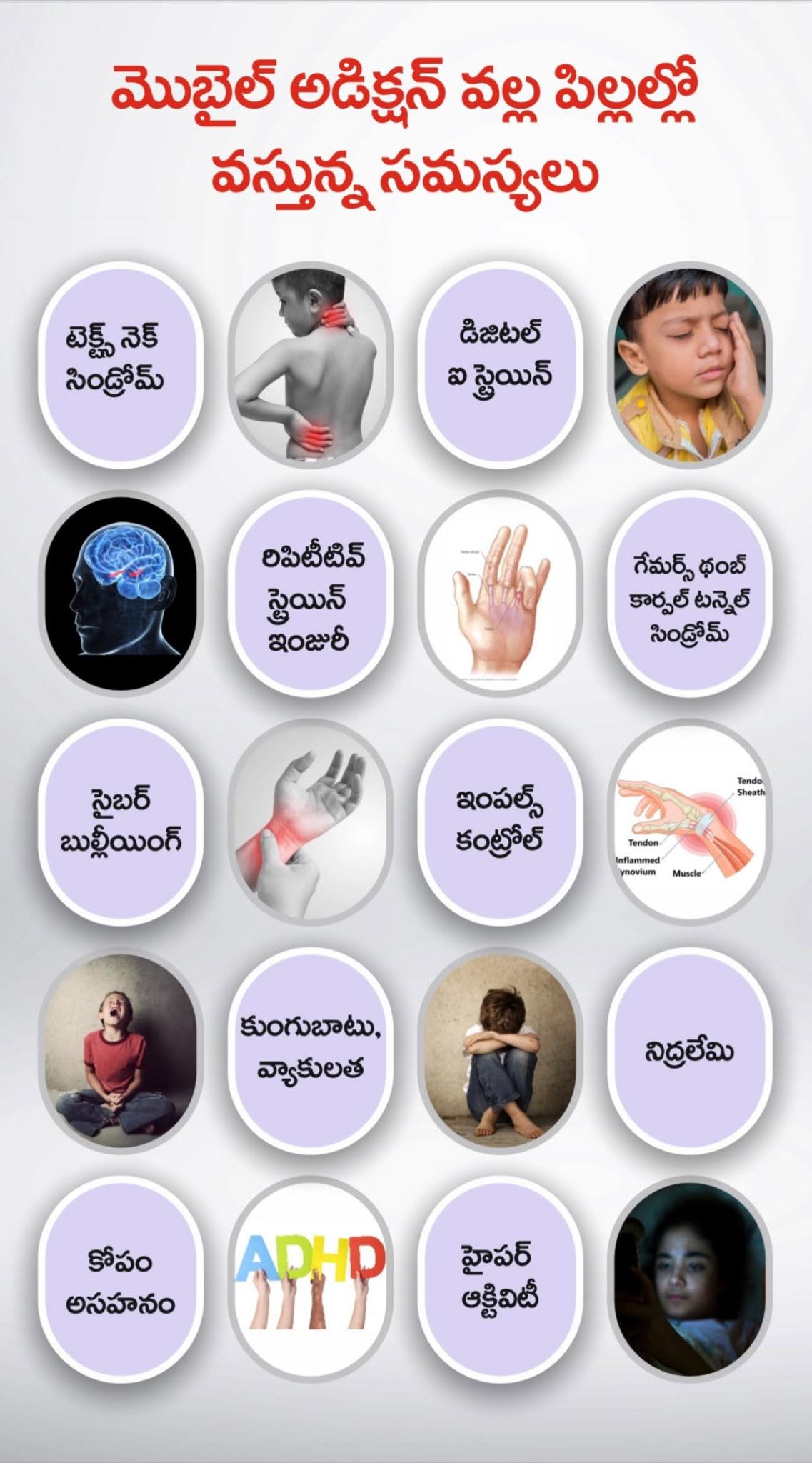


Congratulations Deepika ( Not our school student but .. )

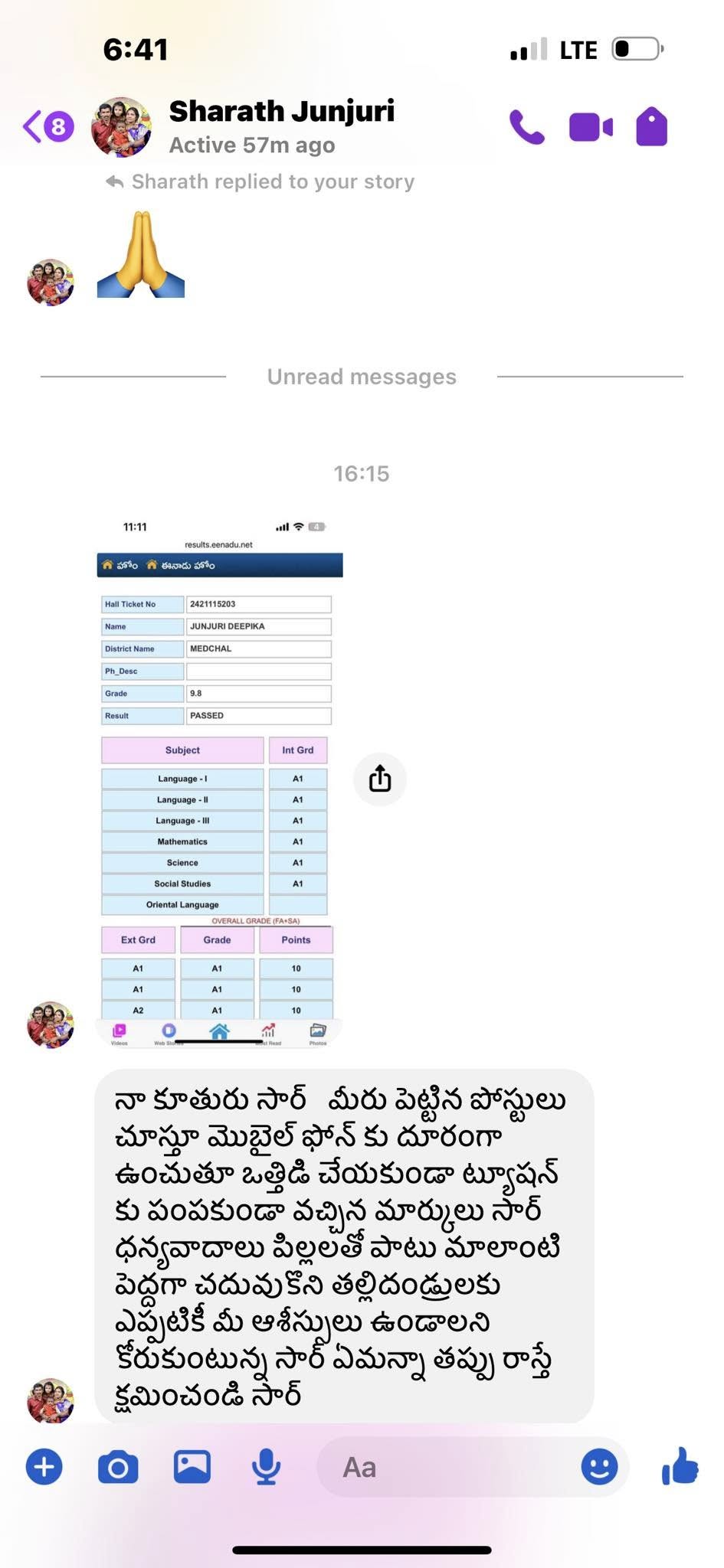
1. Dashavatara (The Ten Avatars) or Navagrahas (The Nine Celestial Planets).
2. Saptapadi (The Seven Sacred Steps) or Shadruchulu (The Six Tastes).
These are the titles of the stories I plan to write by next Monday.
1. Unaware of what was coming, a cuckoo sang early and danced in delight.
2. Whatever little remained was lost; everything came to an end.
3. "Happiness lies in togetherness" - and with unity comes good fortune.
These are the songs I am listening to on YouTube right now.
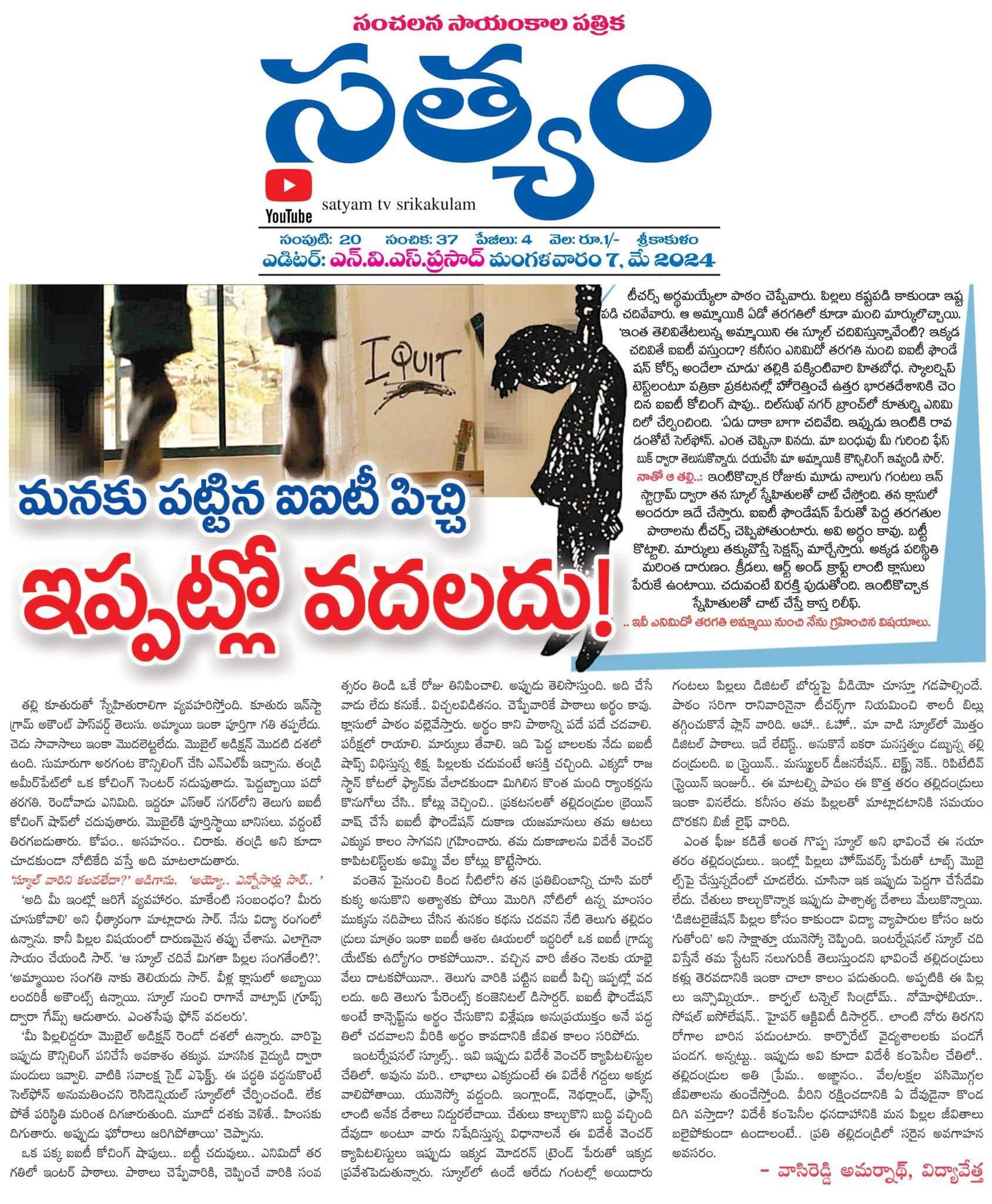
Teachers explained lessons in a way that students could easily understand.
Children studied not because they were forced to, but because they genuinely enjoyed learning.
The girl scored excellent marks even in the seventh grade.
"Why are you keeping such a bright child in this school? Will she get into IIT by studying here? At least enroll her in an IIT Foundation course from the eighth grade onward," advised a well-meaning neighbor.
Influenced by such advice, the mother enrolled her daughter in the eighth grade at the Dilsukhnagar branch of a North India-based IIT coaching institute that heavily advertised its scholarship tests in newspapers.
One day, the mother approached me.
"She studied very well until seventh grade. But now, the moment she comes home, she picks up her mobile phone. No matter how much we tell her, she doesn't listen. One of our relatives came to know about you through Facebook. Please counsel my daughter, sir."
I spoke to the girl.
She told me that after returning home, she spent three to four hours every day chatting with her classmates on Instagram. According to her, almost everyone in her class did the same.
In the name of IIT Foundation, teachers were teaching higher-grade concepts that she couldn't understand. The only option was rote memorization. If students scored low marks, they were shifted to weaker sections where the situation was even worse. Sports, art, and craft classes existed only on paper. She had gradually begun to dislike studying, and chatting with friends after school had become her only source of relief.
These were the observations I gathered from that eighth-grade student.
The mother had maintained a friendly relationship with her daughter.
She even knew her daughter's Instagram password.
Fortunately, the girl had not completely gone astray. She had not yet fallen into bad company. Her mobile addiction was still in its early stage.
After about thirty minutes of counseling, I used Neuro-Linguistic Programming (NLP) techniques to help her.
Another father came to meet me.
He runs a coaching center in Ameerpet.
His elder son was in the tenth grade, and the younger one was in the eighth grade. Both studied at a Telugu-medium IIT coaching school in SR Nagar.
Both boys had become completely addicted to mobile phones. If anyone tried to stop them, they became angry, irritated, and rebellious. They even spoke disrespectfully to their own father.
I asked him, "Didn't you discuss this with the school?"
He replied, "Many times, sir. Their response was, 'That's your family matter. It has nothing to do with us. You handle it yourself.' Sir, I myself work in the field of education, yet I made a terrible mistake with my own children. Please help us somehow."
I asked another question.
"What about the other students in the school?"
He replied, "I don't know about the girls, sir. But almost every boy in their class has social media accounts. The moment they return home, they start playing games through WhatsApp groups. They simply don't put their phones down."
I explained the seriousness of the situation.
"Both your children are already in the second stage of mobile addiction. Counseling alone may not be very effective now. Medical treatment under the supervision of a psychiatrist may become necessary, although medications come with numerous side effects. If you wish to avoid that, admit them to a residential school where mobile phones are not permitted. Otherwise, their condition may deteriorate further. If they progress to the third stage, aggressive behavior may emerge, leading to serious consequences."
This reminds me of the old expressions, 'Small punishment for children' and 'Great punishment for children.'
On one side, there are IIT coaching factories.
Rote learning dominates.
Students in the eighth grade are made to study Intermediate-level syllabus.
It feels as though those designing and enforcing such systems want children to consume an entire year's worth of learning in a single day.
Since no one questions this approach, it continues unchecked.
Often, even the teachers themselves do not fully understand what they teach. They merely complete the lesson in class. Students are then expected to repeatedly memorize concepts they don't understand, reproduce them in examinations, and score marks.
This has become the punishment imposed upon children by many IIT coaching institutions.
As a result, children gradually lose all interest in learning.
Some coaching companies purchase top-ranking students from places like Kota in Rajasthan, spend crores on advertisements, and brainwash parents. Realizing that this business model may not survive forever, many of these owners have sold their institutions to foreign venture capital firms for thousands of crores of rupees.
It reminds one of the story of the dog that, while crossing a bridge, saw its own reflection in the water. Mistaking it for another dog carrying a bigger piece of meat, it barked in greed and lost the meat it already had.
Unfortunately, many Telugu parents who never reflected on the moral of that story continue to swing in the cradle of IIT dreams.
Even though nearly one out of every two IIT graduates struggles to find employment, and many who do find jobs earn salaries that barely cross ₹50,000 a month, the obsession with IIT among Telugu parents continues unabated.
It has become almost a congenital disorder.
Many parents still fail to understand that IIT Foundation should focus on conceptual understanding, analytical thinking, and practical application-not memorization.
Then comes another trend-the so-called International Schools.
Many of them are now owned by foreign venture capital companies.
Wherever profits exist, global investors naturally follow.
UNESCO has already raised concerns.
Countries such as England, the Netherlands, and France have learned difficult lessons after implementing excessive digitalization in education. Policies they are now restricting are being introduced here under the attractive label of "modern education."
Children spend five or six out of every six or seven classroom hours simply watching videos on digital boards.
One reason is simple: schools can appoint less-qualified teachers and reduce salary expenses.
Many affluent parents proudly proclaim, "Our child's school is completely digital. This is the latest trend," without realizing the potential consequences.
Terms like eye strain, macular degeneration, text neck, and repetitive strain injury are still unfamiliar to many parents.
Busy lifestyles leave them with little time even to talk to their own children.
Many parents judge a school's quality solely by the amount of fees it charges. They seldom examine what their children are actually doing on tablets and mobile phones under the name of homework. Even when they eventually notice, correcting the damage becomes extremely difficult.
Many Western countries have already begun reversing excessive digitalization after learning from experience.
UNESCO itself has stated that much of educational digitalization today benefits education businesses more than children.
Parents who believe that enrolling their children in expensive international schools enhances their social status may take a long time to recognize this reality.
By then, many children may already be suffering from conditions such as insomnia, carpal tunnel syndrome, nomophobia, social isolation, and attention or hyperactivity disorders.
Meanwhile, corporate hospitals-many of which are themselves owned by foreign companies-stand ready to profit from these growing health problems.
Excessive parental affection combined with lack of awareness is quietly destroying the lives of thousands of children.
Will any divine force descend from the heavens to rescue them?
If we truly wish to prevent our children's futures from becoming victims of the profit motives of multinational corporations, every parent must develop a proper understanding of these issues.
Please share this message with your relatives and friends.
If even one parent among a thousand becomes aware and makes better choices for their child, that child's future may be transformed for the better.
That itself would be a noble contribution.
- Vasireddy Amarnath, Educationist
Did we truly teach our students? Did we prepare them well for life?
Once the academic year ends, we take a short break during the summer holidays and then return with renewed energy for the new academic session.
That has always been our approach.
We have always known that our former students are achieving extraordinary success in their careers and in life.
For a long time, I never felt the need to publicize those achievements.
However, corporate educational institutions that struggle to attract admissions-and send their teachers door-to-door during the summer holidays to recruit students-began spreading misinformation: "Amarnath Sir is a good person, and Slate is fine until Grade 5. But if your child wants to get into IIT or become a doctor, they must join our coaching-oriented school."
If those who advertise questionable ranks can promote themselves so aggressively, shouldn't we proudly showcase the achievements of our students, each of whom has grown into a remarkable individual?
Take a look at the extraordinary accomplishments of our students.
And while you're at it, perhaps take a closer look at what is happening inside your own institutions-how many students are becoming addicted to mobile phones, what they do after returning home, and how their education is gradually losing its purpose.
Otherwise, in another two or three years, you may not even have a single genuine rank left to boast about.
If you undergo medical tests at one diagnostic center and then visit another hospital, they often tell you, "Those test reports are not valid. You need to repeat all the tests at our hospital."
Does that mean the first diagnostic center did not conduct the tests scientifically?
Or is it simply the hospital-or the doctor-driven by financial greed?
Surely, someone in this chain is being dishonest.
Who is it?
Have the governments and regulatory authorities become so ineffective that they no longer monitor or address such practices?
The heat is unbearable... scorching... burning.
Words in the Telugu language seem insufficient to describe it.
The summer is unlike anything we have ever seen or experienced.
At the same time, elections are underway.
Our elders used to say that when righteousness (Dharma) stands firmly on all four legs, rains arrive regularly, agriculture flourishes, people enjoy good health, prosperity, and abundance.
That was the ideal of Rama Rajya.
"Dharmo Rakshati Rakshitah" - Dharma protects those who protect it.
It is said that during the Krita Yuga, Dharma stood firmly on all four legs, while in Kali Yuga it limps along on a single leg.
That saying now seems outdated.
Today, in Telugu society, Dharma has moved from a wheelchair to a ventilator.
Everywhere one looks, injustice and dishonesty prevail.
This, I believe, is one of the reasons behind nature's growing imbalance.
Many people sigh and ask, "Where is God? If God truly exists, how can so many injustices happen?"
Those who do not believe in God are called atheists.
But the real atheists are often politicians, many religious leaders, and even some of their followers.
The fear of committing sin has disappeared.
The mindset has become, "As long as I survive today, as long as I gain wealth and fame, nothing else matters."
Even many who preach religion have succumbed to this mentality.
As for politicians, they seem to have embraced it completely.
(Before anyone from any religion or political party assumes this is aimed at them because elections are underway-please don't. This is a broader reflection.)
Perhaps that is why nature itself appears angry.
The heat is becoming increasingly unbearable.
This is not mere sentiment.
This is about logic... and science.
Someone who amassed wealth by illegally felling thousands of valuable red sandalwood trees is now celebrated as a hero.
People cheer for him, drink the liquor he distributes, eat food purchased with that money, and unknowingly pay the price with their own health.
As people's wrongdoings increase, diseases also multiply.
Some exploit these illnesses through unethical medical practices, amass fortunes, and are celebrated as heroes.
During the pandemic too, many glorified those who profited from people's suffering.
Others have earned fortunes by exploiting sand, stone, granite, groundwater, and the natural resources of the earth.
Many such people now stand as candidates in elections.
Driven by caste loyalties, religious divisions, and above all, greed for money, millions of people celebrate anyone who throws a few hundred rupees at them every five years.
They accept the money, enjoy the temporary benefits, and live as though tomorrow does not matter.
Elsewhere, fertile farmland and forests are being destroyed in the name of real estate development, creating billionaires almost overnight.
Drug networks have even begun targeting school children, earning enormous profits through the cultivation and distribution of narcotics.
Fraudulent projects, land encroachments, organized crime, and corruption continue to generate immense wealth for many.
Medical mafias, sand mafias, red sandalwood smugglers, real estate mafias, contract mafias, drug syndicates, and settlement gangs...
Are these not the "heroes" of our times?
People of Telugu society, place your hand on your heart and answer honestly-if not to anyone else, at least to your own conscience.
Even teachers, who are supposed to guide society with wisdom and values, have reportedly accepted money for votes in certain elections.
What greater tragedy can there be?
Is there no tomorrow?
If things are this bad today, how will your children and grandchildren live on this earth?
Or have we simply resigned ourselves to believing that another disaster like COVID will eventually wipe everyone out?
If forests are destroyed, rivers and hills are damaged, and nature is relentlessly exploited, should we not expect harsher summers and recurring droughts?
Who taught us that such actions would have no consequences?
When ordinary people begin believing that anything is acceptable for money, those driven purely by profit will naturally exploit fear, misinformation, and crisis for even greater financial gain.
Has our basic common sense disappeared?
Has the very person responsible for harming our future now become our hero?
If so, what greater shame could there be?
Where has our humanity gone?
Has it become as lifeless as a lump of clay?
Have we forgotten how to live responsibly?
Many think the fear of sin belongs only to religion.
That is a misunderstanding.
Long ago, moral teachings were expressed through religious language so that ordinary people could easily understand them.
If forests are destroyed, if rivers and land are exploited for mining and unchecked development, if fertile land is converted indiscriminately into real estate projects, should we expect pleasant weather?
Or should we expect intense heat, drought, and environmental collapse?
If people celebrate money earned through corruption, that money must eventually be recovered somehow.
It often comes back in the form of adulterated food, polluted water, contaminated air, and declining public health.
Then why are we surprised when diseases spread?
Adharma destroys those who protect it.
If you protect injustice, one day that very injustice will consume you.
That is exactly what we are witnessing today.
So where, then, is God in all this?
Isn't this simply the natural consequence of our own actions?
Whether one is a believer or a non-believer, the lesson remains the same:
When humanity abandons righteousness, nature itself delivers the consequences.
1. The Secret to Burning Body Fat in No Time!
2. Eat One Spoonful a Day and Watch Diabetes Disappear!
3. Do This and Your Children Will Become Geniuses!
4. Want to Become a Millionaire Without Leaving Home?
5. Do This to Get the Handsome Looks of Superstar Mahesh Babu!
6. Improve Your Kidney Health Instantly with This Simple Trick!
7. Speak English Like a Native Brit in Just Five Days!
8. She Loves This More Than Anything Else! Want to Know What It Is?
Nothing serious, actually. I'm just starting a YouTube channel and putting together some catchy video titles!

https://www.eenadu.net/telug.../world/general/0800/124083483

China harasses scientist who decoded the coronavirus genome.
Triumphed over death... Shined in the 10th grade | General Student
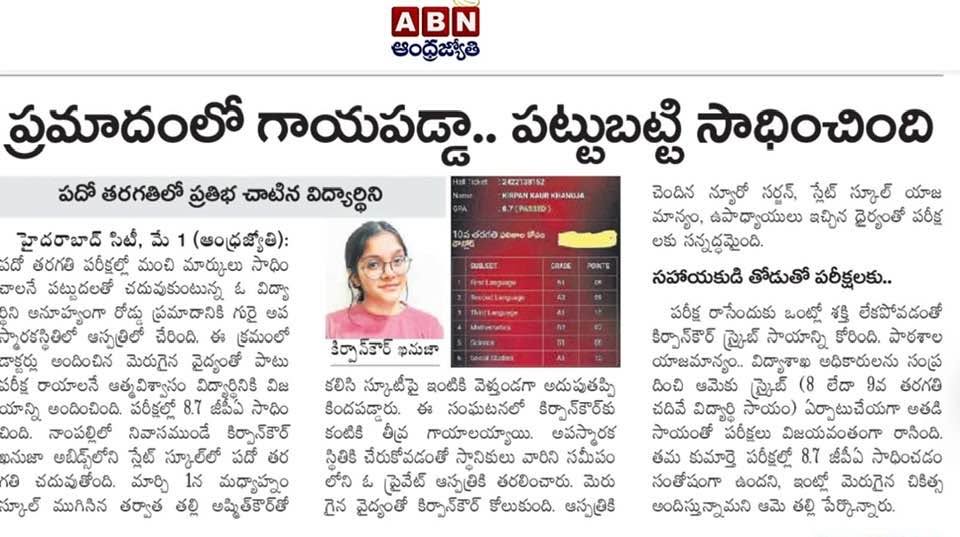
"If there were any side effects, they would have appeared after the first dose. It is extremely rare for them to occur after the second dose."
These are the very same people who, until yesterday, were aggressively marketing their vaccine as though it were flawless.
Here is the reality.
As the number of doses increases, the risk of adverse effects can also increase.
Only a small percentage of people experienced side effects after the first dose.
More people reported side effects after the second dose.
With the booster dose, the number was higher still.
What's done is done-let it go.
If you have not experienced any side effects so far, the likelihood of developing entirely new ones now is relatively low.
Follow the suggestions I shared in yesterday's post.
Remember this.
In the coming years, vaccines may be promoted for everything-from itching and skin conditions to fatigue and even sleep-related issues.
They will be marketed extensively.
Taking unnecessary vaccines without a clear medical indication may place an unnecessary burden on the immune system.
I have previously shared many posts and videos discussing allergies and autoimmune disorders. Please revisit those if you wish to understand the topic better.
Voters generally have two objectives during elections.
1. To ensure that the political party they support wins.
2. To ensure that the party they oppose loses.
When an election is essentially a contest between only two major parties, this distinction often has little impact on the final outcome.
However, Telangana is witnessing a three-cornered contest.
Just a short while ago, a senior journalist-who has remained away from active journalism for several years for various reasons-appeared on a digital news channel and analyzed the upcoming election results, claiming that the real contest was only between two parties.
Regardless of whether that assessment is accurate or not, if such a narrative gains widespread publicity, some voters whose primary goal is to defeat a particular party may conclude that the party they originally intended to support has no realistic chance of winning. As a result, they may shift their votes to another party that appears more capable of defeating their common opponent.
This could cause one party to suffer significant losses, with its vote share declining even further-unless it takes timely corrective measures to minimize the damage.
Another party may also experience some disadvantage because its principal rival gains additional votes.
Overall, this type of narrative ultimately benefits one particular political party.
Did the journalist successfully settle his old scores through this analysis? Time will tell.
One thing, however, is certain: in politics, a negative vote bank-the desire to defeat a particular party-can sometimes play a decisive role in determining the outcome.
And so can old enemies made long ago.
If you have not experienced any side effects so far, the likelihood of developing new ones at this stage is very low.
However, as the saying goes, "Even a small snake should be dealt with using a big stick." In other words, it is wise to take preventive measures and maintain good health.
Consider the following healthy lifestyle practices:
1. Betel leaves (in moderation, where culturally appropriate)
2. Amaranth greens
3. Ginger
4. Garlic
5. Turmeric
6. Walnuts
7. If you do not have diabetes, include fresh fruits in your diet.
8. Reduce your intake of white rice and other refined carbohydrates.
9. Eat plenty of vegetables.
10. Ensure adequate protein intake.
11. Drink plenty of water.
12. Make walking or regular physical activity a daily habit.
Following these healthy habits is generally beneficial for overall well-being.
Betel leaves, walnuts, garlic, amaranth greens, turmeric, ginger, a low-carbohydrate diet (preferably emphasizing complex carbohydrates), adequate protein, three to four liters of water a day, and a 45-minute daily walk.
You do not need a pharmacy for these.
They are not particularly expensive.
They generally do not carry the kinds of side effects associated with many medications.
I repeatedly wrote posts saying, “If you believe that the Shield vaccine carries significant risks, avoid taking additional unnecessary doses. If you have already taken it, focus on healthy lifestyle measures like these.”
I spent countless hours reading international medical journals, studying the available research, applying my understanding, and sharing posts for the benefit of the public.
Those who trusted the information chose to follow it.
Those who did not... did not.
As the saying goes, adding any number of zeros beside another zero still results in zero—it adds no value.
I no longer have either the time or the patience to keep reposting the same information for people who have already chosen not to believe it.
More than anything else, I no longer have the motivation.
Those who badmouthed me back then.